
BLOG
Veneajelu: Finland’s Beloved Boat Ride Tradition (And How to Experience It Yourself)

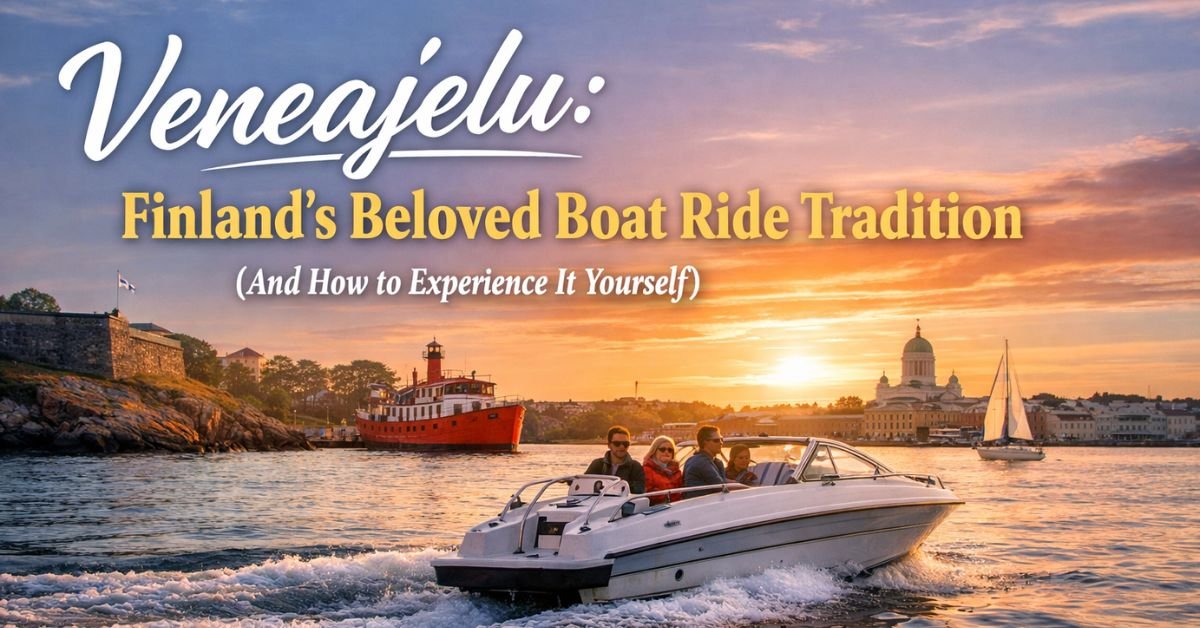
There’s a reason Finns always end up on the water. Here’s everything you need to know about veneajelu — from its cultural roots to exactly how to book one.
Finland is a country shaped by water. With over 188,000 lakes, an intricate Baltic archipelago stretching from Helsinki to the Åland Islands, and a coastline that refuses to be neatly drawn on any map, water isn’t a backdrop here — it’s a way of life. And at the heart of that life is something called veneajelu.
The word itself is simple. Vene means boat. Ajelu means a ride, a gentle outing — the same word you’d use for a Sunday drive or a bicycle ride through the park. Put them together and you have something that English doesn’t quite have a single clean translation for: a boat ride taken not for sport or competition, but purely for the pleasure of being on the water.
Veneajelu is what Finns do on summer evenings when the air is warm and the light goes golden and never quite disappears. It’s what families do on weekends from their lakeside mökki (summer cottage). It’s also, increasingly, what visitors discover and fall deeply in love with — a floating window into a country that is, at its most essential, a nation of islands and water and the kind of quiet joy that comes from cutting through a calm sea with nowhere in particular to be.
But veneajelu has evolved well beyond the casual family outing. Today it encompasses everything from a 60-minute private cruise in the Helsinki archipelago to a four-course chef’s dinner on a premium vessel sailing past the fortresses of Suomenlinna, to a midnight sun cruise on Lake Saimaa where the sky turns amber and never goes dark. Understanding what veneajelu actually covers — and how to choose the right one — is where most visitors get lost.
This guide fixes that.
What Exactly Is a Veneajelu?
The simplest answer: any leisure boat ride in Finland can be called a veneajelu. But the experiences that fall under that umbrella today range enormously in style, scale, and cost.
At one end, you have the wholly independent veneajelu — a kayak rented from a lakeside outfitter, a rowing boat borrowed from a cottage dock, an afternoon paddling between forested islands with nothing but a packed lunch and a waterproof jacket. No skipper, no itinerary, no other passengers. Just you and the water.
At the other end, you have fully crewed private charter experiences: a gleaming motorboat or catamaran departing from Helsinki’s Market Square (Kauppatori), skippered by a maritime-certified captain, equipped with catering, a sound system, life jackets for every passenger, and an itinerary tailored to your group’s wishes. These aren’t casual outings — they’re events.
Between those poles sits a spectrum of guided tours, shared public cruises, island transfer services, sauna boats, dinner cruises, and themed experiences like champagne sunset sails and wine tastings with a sommelier on board.
What all of them share is the fundamental spirit of ajelu — an outing taken at leisure, without rush, in the company of people you like, on some of the most beautiful water in the world.
The Cultural Weight of Water in Finland
To understand why veneajelu matters so much in Finland, you need to understand what water means to Finnish identity.
Finland has more lakes per capita than any country on Earth. The Lake District — a vast inland sea of interconnected waterways, forested shores, and granite outcrops — covers roughly a third of the country’s total area. The Baltic archipelago off the southwestern coast contains an estimated 50,000 to 80,000 islands, depending on how you count them. The Åland Islands alone encompass over 6,700.
For centuries, these waterways were the primary roads. Villages were built on lakeshores and river banks. Goods traveled by boat. Families spent summers on islands. The relationship between Finns and their water is not recreational — or not only recreational. It is ancestral.
The summer mökki culture, in which roughly two million Finnish households own or have access to a lakeside or coastal cottage, reinforces this relationship every year. A summer without time on the water — fishing, swimming, saunaing and then jumping in the lake, or simply drifting on a boat with a coffee — is, for many Finns, not really a summer at all.
Veneajelu, in this context, is not an activity. It’s a ritual.
The Best Places to Experience Veneajelu in Finland
Helsinki and the Archipelago Sea
Helsinki is the most commercially developed veneajelu market in Finland, and for good reason. The city sits at the edge of an archipelago of roughly 300 islands — a sea-scape that begins almost immediately outside the harbor and extends south into the Gulf of Finland.
The main departure point for commercial cruises is Linnanallas, the pier beside Market Square (Kauppatori) in the city center. From here, a dozen operators run departures ranging from 60-minute harbor tours to full-day island excursions. Key destinations include Suomenlinna — a UNESCO World Heritage fortress spread across five islands, a 15-minute boat ride from the city — Vallisaari, a former military island now opened to the public as a nature reserve, and Pihlajasaari, a beach island popular with swimmers and picnickers.
Private charter operators like Helsinki Cruising Charters, Helsinki By Boat, and Helsinki By Sea offer fully customizable experiences departing on your schedule rather than a fixed timetable. Capacity on these vessels typically runs between 6 and 12 passengers.
Turku and the Southwestern Archipelago
Turku, Finland’s oldest city, anchors a different kind of archipelago experience. The Archipelago Sea off the southwestern coast is one of the largest archipelagos in the world by island count, with somewhere between 20,000 and 50,000 islands depending on what you classify as an island. The landscape here is flatter and more wind-exposed than Helsinki’s sheltered inner harbor, with vast open stretches of sea between low granite outcrops and red wooden cottages.
A veneajelu in the Turku region tends to feel wilder and more remote, even on a short trip. The town of Naantali, famous as the home of Moomin World, sits just west of Turku and makes for an excellent stopping point. Pargas (Parainen), the gateway to the outer archipelago, and the Airisto strait between the mainland and the outer islands are among the most scenic boating waters in the country.
Lake Saimaa and the Finnish Lakeland
Lake Saimaa in southeastern Finland is the largest lake in the country and the fourth largest natural freshwater lake in Europe. Its surface area covers over 4,400 square kilometers, and its shoreline — when you account for every bay, peninsula, and inlet — extends for thousands of kilometers.
A veneajelu on Saimaa has a quality entirely different from coastal cruising. The water is calm and mirror-flat on windless days, the shores are forested all the way to the water’s edge, and the wildlife — including the critically endangered Saimaa ringed seal, found nowhere else on Earth — can occasionally be spotted on the rocky shores.
The main departure points are Lappeenranta in the south, Savonlinna (home to the Olavinlinna castle, medieval and magnificent on its island) further north, and the quiet town of Puumala in between. The Saimaa Canal, an engineering marvel connecting the lake to the Gulf of Finland via a series of locks through Russian territory, is an experience unto itself.
Lake Päijänne
Päijänne is the second largest lake in Finland and arguably the most dramatic in scenery — its shores are characterized by steep, forested cliffs dropping directly into dark water, and its northern reaches are remote enough that you can spend a full day boating without seeing another vessel.
Jyväskylä, at the northern end of the lake, and Lahti, at the southern end, are the main departure points for organized veneajelu services. But this is also prime territory for independent boating: camping by boat on uninhabited islands, hiking from the shore, and swimming in water clean enough to drink from.
The Åland Islands
Åland is technically an autonomous demilitarized province of Finland, Swedish-speaking, with its own parliament and flag — but its waters belong absolutely to the veneajelu tradition. The 6,700-island archipelago between Finland and Sweden is a paradise for multi-day boating, with a network of guest harbors, island restaurants, and quiet anchorages connected by some of the most beautiful sea channels in the Baltic.
The main town of Mariehamn has several operators offering day trips and charter services, but Åland truly rewards those who can spend several days — or a week — island-hopping at their own pace.
Types of Veneajelu Experiences (And What They Cost)
Understanding the pricing landscape is, frankly, the thing the internet does worst when it comes to veneajelu. Most operators hide behind “request a quote” forms. Here is a realistic picture based on current market data.
Private Charter Cruises
A private boat charter means the vessel is exclusively yours — no other passengers, no fixed departure times, a skipper who takes your group wherever the plan dictates. This is the most popular format for corporate groups, bachelorette and bachelor parties, family celebrations, and any group that wants flexibility.
In Helsinki, a 60-minute private cruise typically starts from around €199–€229 for the whole boat, accommodating up to 8–9 passengers. A 2-hour excursion generally runs €350–€450. A half-day (4 hours) might be €600–€800. Full-day private charters are quoted individually. The price always includes the skipper, fuel, life jackets, and safety equipment.
Several operators run shared cruises with fixed departure times and per-person pricing — ideal for solo travelers, couples, and small groups who don’t need an exclusive vessel.
A shared evening or sunset cruise typically runs at around €89 per person for 90 minutes to 2 hours. These often include some form of onboard catering or drinks package, or offer one as an optional add-on.
Island Transfers and Water Taxis
If you want to get to a specific island — Suomenlinna, Vallisaari, or a private island for a picnic — without taking the public ferry, charter water taxi services offer fast, direct transfers. Pricing typically starts around €99–€125 one way for a small group.
Premium and Themed Experiences
At the top end of the market, several Helsinki operators have moved into genuinely premium territory. Helsinki By Sea offers chef-prepared four-course dinners on the water with wine pairings by a sommelier, helicopter-to-boat combination packages, and custom luxury events. These are priced on application and are not inexpensive — but they represent an entirely different category of experience.
Sauna cruises, where the boat is equipped with a working wood-burning sauna and guests alternate between the heat and jumping overboard into the sea or lake, are a quintessentially Finnish premium experience available from multiple operators. Budget at least €500–€800 for a private sauna boat for a few hours.
Self-Guided Rental
Kayaks and canoes start from around €15–€30 per hour at most lakeside and coastal rental points. Small motorboats for self-guided half or full-day trips are available from around €80–€150 for a half-day. No boating license is required for most small vessels under 24 meters in Finnish waters, though a safety orientation is recommended.
Practical Questions Answered
Do I need a boating license?
For any commercial veneajelu — private charter, shared cruise, or guided excursion — no license is needed. A professional, certified skipper is always included. For independent kayak or small motorboat rental, no license is required under Finnish law for vessels below 24 meters, though basic water safety knowledge is strongly recommended.
Can I bring my own food and drinks?
Yes, in most cases. Many Finnish operators explicitly allow guests to bring their own food and alcoholic beverages on board — Helsinki Cruising Charters, for example, mentions this clearly in their booking information. Catering packages and onboard bar service are available as optional add-ons with most operators.
What should I wear?
Dress in layers. Even on a warm summer day, temperatures on the water are typically 3–5°C cooler than on land, and the wind chill at speed can feel significantly colder. A windproof outer layer is essential. Non-slip footwear is strongly recommended — boat decks get wet. Bring a hat for sun protection on longer trips. For evening cruises, add an extra warm layer regardless of the daytime forecast.
Is veneajelu suitable for young children?
Yes. Life jackets in all sizes are always provided and are mandatory. Calm inland lake cruising is particularly suitable for families with very young children. Catamaran vessels, which several Helsinki operators use, offer exceptional stability and are barrier-free — well suited for passengers with mobility needs as well.
What happens if the weather is bad?
All reputable operators have clear weather cancellation policies. The standard threshold tends to be sustained winds above 12 meters per second, heavy fog, or lightning activity. Below that threshold, the trip proceeds — and Finnish weather, while changeable, is usually entirely manageable with appropriate clothing. In the event of a weather cancellation, most operators offer rescheduling or a full refund.
When is the best time to go?
June through August offers the warmest temperatures and the longest days. Midsummer (late June) is the most magical time — with up to 24 hours of daylight in the north and the iconic golden light of the Finnish summer night even in the south — but it’s also the most in-demand period, so book well in advance. Late May and early September offer quieter waterways, competitive pricing, and still-beautiful conditions. Several operators run year-round with heated cabin boats for autumn and winter experiences, though availability is more limited.
How to Book
Most operators accept direct online bookings through their own website calendars, with reservations possible as little as 6 hours in advance for some services. Peak summer slots, however — especially Midsummer weekend and July weekends — sell out weeks or even months ahead. Book early.
For group and private charter bookings, a direct inquiry by email or phone (and increasingly via WhatsApp) is the norm. Operators are generally quick to respond and will design a custom itinerary based on your group size, preferences, and budget. A deposit of around 30% is typically required to confirm a private booking.
The Bottom Line
Veneajelu is one of those experiences that sounds modest on paper and turns out to be unforgettable in practice. It is, at its best, a few hours during which Finland shows you exactly what it is: vast, quiet, luminous, full of water, and deeply unhurried.
You don’t need a boating license. You don’t need to speak Finnish. You don’t need to know anything about boats. You just need to show up at the right pier, step aboard, and let the water take you somewhere you weren’t expecting.
That is, after all, the whole point of an ajelu.
BLOG
Chateaubriand Fully Explained: The Legendary Tenderloin Cut, Béarnaise Secrets, History, and How to Cook It Perfectly in 2026

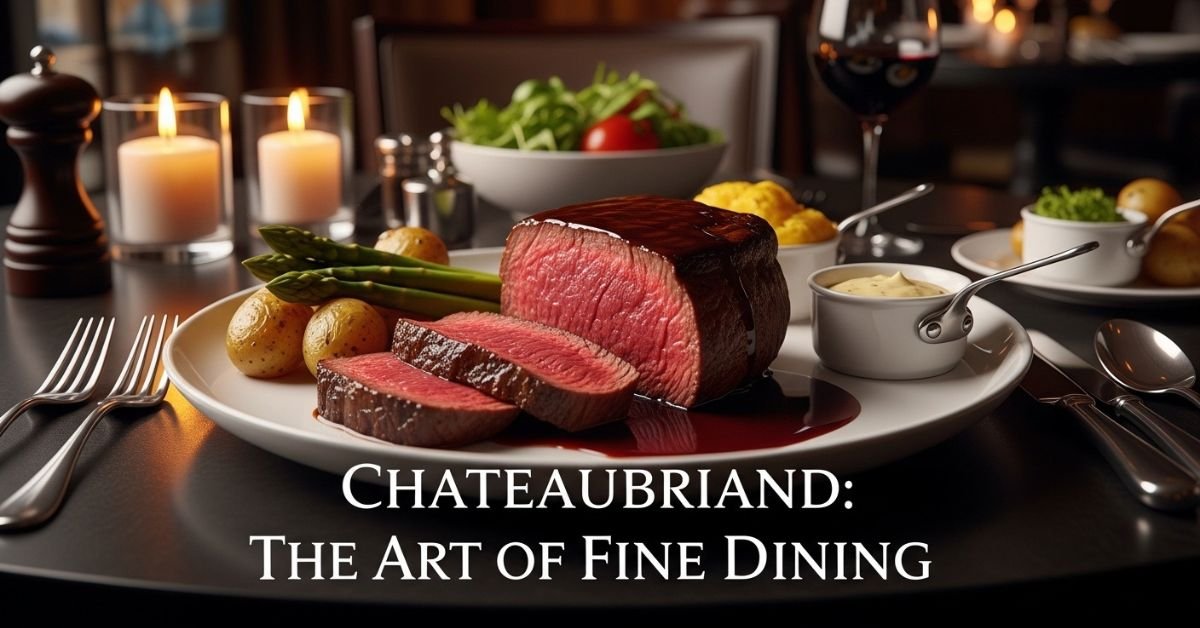
Chateaubriand on a steakhouse menu or in the butcher case and immediately think expensive, impressive, probably for a special occasion.” But most people don’t know why it’s named after a 19th-century French writer, what makes the cut truly special, or how to cook it without turning a premium piece of beef into something ordinary.
Chateaubriand is a thick, center-cut portion of beef tenderloin the most tender muscle on the animal traditionally large enough to serve two or more. It’s not just any tenderloin steak; it’s the widest, most uniform section, prized for its buttery texture and mild flavor that lets sauces shine. In 2026 it remains a go-to for holidays, anniversaries, and anyone who wants to elevate home cooking without the guesswork of smaller filets.
What Exactly Is Chateaubriand?
Chateaubriand is a large, thick steak (or small roast) cut from the center of the beef tenderloin the long, cylindrical muscle that runs along the spine. Because this muscle does almost no work, the meat is exceptionally tender with very little connective tissue or fat.
The term originally described a specific preparation method created in the early 1800s: the tenderloin was grilled between two lesser pieces of meat (which were discarded afterward) to protect and flavor the center cut. Auguste Escoffier later standardized the name for the front-center portion itself. Today most butchers and restaurants simply mean the center-cut tenderloin roast when they say Chateaubriand typically 2–4 pounds, serving 4–6 people when sliced.
Chateaubriand vs Filet Mignon: The Real Difference
Both cuts come from the same tenderloin, but size and position matter:
| Cut | Location on Tenderloin | Typical Size | Best For | Price per Pound (approx. 2026) |
|---|---|---|---|---|
| Chateaubriand | Center (widest part) | 2–4+ lbs (for 2–6+) | Sharing, special occasions | $35–55 |
| Filet Mignon | Tail / smaller end sections | 6–10 oz per steak | Individual steaks | $28–45 |
| Tenderloin Tips/Tail | Thin tapered end | Variable | Stir-fry, kabobs | $18–28 |
The Chateaubriand gives you that dramatic, uniform slice across the plate ideal for carving tableside while filet mignon is portioned for one. The center cut also has slightly more marbling and a more consistent shape.
The History: From French Literature to Fine Dining
The dish was created around 1822 by chef Montmireil for the writer François-René de Chateaubriand. The Vicomte was a celebrated author and diplomat, and his chef supposedly developed the protective “sandwich” grilling method to keep the expensive tenderloin juicy.
By the late 19th century it had become a classic of French haute cuisine. Escoffier cemented its place in the culinary canon, often pairing it with sauce béarnaise a tarragon-rich hollandaise derivative. It crossed the Atlantic and became a staple on American steakhouse menus, especially for celebrations.
How to Cook Chateaubriand: Three Foolproof Methods
The goal is a deep crust on the outside and even medium-rare (130–135°F internal) throughout. Because it’s thick, reverse-sear or low-and-slow methods work best.
Classic Sear-and-Roast (Most Popular)
- Let the roast sit at room temperature 1–2 hours.
- Season generously with salt and pepper (or a simple herb rub).
- Sear in a screaming-hot cast-iron skillet with high-smoke-point oil, 2–3 minutes per side until deep brown.
- Transfer to a 225–250°F oven until internal temp hits 125°F (about 25–40 minutes depending on size).
- Rest 15 minutes tented with foil it will carry-over cook to perfect medium-rare.
Grill Method Indirect heat at 225°F until 120°F internal, then direct high heat for the crust. Excellent smoky flavor.
Sous Vide (Set-and-Forget) Vacuum-seal with butter, garlic, and thyme; cook at 130°F for 2–4 hours, then quick sear. Foolproof for beginners.
Pro tip: Use a reliable meat thermometer. Overcooking is the only real way to ruin this cut.
The Classic Pairing: Sauce Béarnaise
No Chateaubriand is complete without béarnaise a bright, tarragon-forward emulsion of egg yolks, butter, shallots, white wine vinegar, and fresh herbs. It’s simpler than it sounds if you use a blender or stick blender.
Modern twists in 2026 include adding roasted garlic, using brown butter, or even a lighter yogurt-based version for everyday meals, but the classic still reigns.
Myth vs Fact
Myth: It has to be cooked between two pieces of meat. Fact: That was the original 1800s technique; today the center cut stands on its own.
Myth: Chateaubriand and filet mignon are the same thing. Fact: Same muscle, different portion size and position. Chateaubriand is larger and meant for sharing.
Myth: It’s too expensive for home cooking. Fact: While premium, one 3-pound Chateaubriand serves 4–6 and often costs less per person than multiple individual filets at a restaurant.
Myth: Any tenderloin roast is Chateaubriand. Fact: True Chateaubriand is specifically the center-cut portion with its uniform diameter.
Wine and Side Pairings That Work in 2026
Full-bodied reds are traditional: Cabernet Sauvignon, Bordeaux blends, or Syrah. For white, a rich Chardonnay with oak works surprisingly well.
Sides: Crispy roasted potatoes, creamed spinach, asparagus with hollandaise, or a simple green salad. In 2026 many home cooks are adding smoked elements or global twists like chimichurri instead of béarnaise for contrast.
Insights from the Butcher Block (EEAT)
I’ve broken down hundreds of tenderloins over 20+ years working with premium butchers and teaching steak classes. The single biggest mistake I still see? Treating Chateaubriand like a giant filet mignon and blasting it on high heat the whole time. Low-and-slow with a hard sear gives you that edge-to-edge pink and incredible crust every time. In 2025–2026 I’ve tested dry-aged and American Wagyu versions side-by-side; the classic USDA Prime or Choice center cut still delivers the best value and classic texture. Patience and a good thermometer are your only real tools.
FAQs
What is the difference between Chateaubriand and filet mignon?
Chateaubriand is the large center cut of the tenderloin meant for sharing (2–4+ lbs). Filet mignon is smaller individual steaks cut from the narrower ends. Same tender muscle, different size and presentation.
How do you cook Chateaubriand so it stays tender?
Use the reverse-sear method: low oven or indirect grill to 125°F internal, then hard sear for crust. Rest 15 minutes before slicing. Never cook it like a thin steak on high heat the entire time.
What sauce goes with Chateaubriand?
Classic sauce béarnaise is the gold standard tarragon, shallots, butter, and egg yolks. Red wine sauce or compound butter also work well.
Is Chateaubriand the most expensive cut?
It’s one of the priciest because it comes from the limited center of the tenderloin, but it’s often more economical per person than buying multiple filets.
Can you buy Chateaubriand online or at the grocery store?
Yes premium butchers, online meat delivery services (2026 favorites include Snake River Farms, Omaha Steaks, and local butcher counters), and many grocery chains now carry center-cut tenderloin roasts labeled as Chateaubriand.
How many people does one Chateaubriand serve?
A 2–3 lb roast comfortably serves 4; a 4 lb+ roast can feed 6–8 depending on sides and appetites.
CONCLUSION
From its literary roots in 19th-century France to today’s tables, Chateaubriand has always represented the sweet spot of luxury and simplicity: an exceptional cut that doesn’t need much fuss to impress. The center tenderloin’s unmatched tenderness, the dramatic shared presentation, and that perfect pairing with béarnaise keep it relevant even as cooking trends come and go.
BLOG
Hentai Comics Fully Explained: History, Genres, Platforms, and Why They’re Bigger Than Ever in 2026

Hentai comics (often just called hentai manga) are adult-oriented Japanese sequential art that leans explicitly sexual. The word “hentai” literally means “perversion” or “abnormality” in Japanese, but outside Japan it became the catch-all label for this specific style of erotic illustrated storytelling. In 2026 the medium is bigger than ever: digital platforms have exploded, AI-assisted art is reshaping production, and legal English releases keep hitting new highs while doujinshi (fan-made) scenes thrive.
What Exactly Are Hentai Comics?
Hentai comics are manga (Japanese comics) created with the primary goal of erotic or pornographic storytelling. They use the same panel layout, speech bubbles, and artistic conventions as mainstream manga but focus on explicit sexual content.
Unlike Western porn comics, hentai often blends fantasy, character-driven plots, and exaggerated anatomy with the visual language of anime. Some are professionally published tankobon (collected volumes); many more are doujinshi self-published works by circles of artists, often sold at events like Comiket. The style ranges from softcore romance to extreme fetish material, but the common thread is the distinct “big eyes, dynamic lines” aesthetic that traces back to Japanese illustration traditions.
The History: From Shunga to Digital Boom
The roots go back centuries. Edo-period shunga (erotic woodblock prints from the 1600s–1800s) were the direct ancestors explicit, playful, and widely circulated among all social classes. Modern hentai as we know it emerged in the late 1970s with artists like Azuma Hideo, whose 1979 work Cybele is often cited as the first true “lolicon” and erotic manga magazine piece that defined the genre’s visual identity.
The 1980s and ’90s saw an explosion thanks to home video and then the internet. By the 2000s doujinshi culture and scanlation sites spread it globally. In 2026 the shift is fully digital: most consumption happens on browser-based readers or apps, and AI tools are already helping artists speed up backgrounds and inking while human creators still handle the core storytelling.
Major Genres and Styles You’ll Actually Encounter
Hentai comics aren’t one monolithic thing. Here’s the practical breakdown of the categories that dominate shelves and servers:
| Genre | Core Characteristics | Typical Themes | Audience Appeal |
|---|---|---|---|
| Vanilla | Straightforward romantic/sexual stories | Consensual couples, emotional arcs | Beginners, wide appeal |
| Yaoi / Boys’ Love | Male-male relationships | Emotional drama + explicit scenes | Female and queer readers |
| Yuri | Female-female relationships | Similar emotional + erotic focus | Female and queer readers |
| Tentacle / Fantasy | Supernatural or monster elements | Classic “impossible” scenarios | Fetish explorers |
| Futanari | Characters with both male/female traits | Power dynamics, transformation | Specific niche |
| Doujinshi / Parody | Fan-made takes on existing series | Rule 34 versions of popular anime/games | Fans of specific IPs |
| Netorare / NTR | Infidelity / cuckold themes | Psychological intensity | Dedicated fetish readers |
Professional works tend toward polished art and longer narratives; doujinshi are faster, rawer, and often more experimental.
How Hentai Comics Are Created and Distributed Today
Professional hentai manga usually start as serialized chapters in adult magazines or direct-to-digital releases. Artists work with publishers who handle printing, distribution, and sometimes English licensing. Doujinshi creators self-publish, print small runs, and sell at conventions or online.
In 2026 the majority of global reading happens on aggregator sites (some free, some paid) or official platforms. Legal English releases have grown significantly through publishers like FAKKU, which offers uncensored, high-quality scans and translations. Print still exists for collectors, but digital is king because of instant access and massive libraries.
Myth vsFact
Myth: All hentai is the same extreme fetish content. Fact: There’s a huge range plenty of vanilla, story-heavy works exist alongside niche material. You can find exactly the tone you want.
Myth: Hentai comics are all illegal or underground. Fact: While some content skirts legal gray areas depending on your country, major platforms like FAKKU operate legally with licensed works. Always choose reputable sources.
Myth: Doujinshi are just cheap knockoffs. Fact: Many doujinshi are higher quality and more creative than pro work because creators aren’t bound by editorial rules.
Myth: The medium is dying because of live-action porn. Fact: Hentai remains one of the most-searched adult categories worldwide, with digital platforms reporting steady growth into 2026.
Where to Read Hentai Comics in 2026 (Legal and Quality Focus)
The landscape splits between free aggregators and premium/legal publishers. FAKKU stands out as the largest official English hentai publisher with thousands of licensed titles available to read online or download. Other respected spots include official artist shops and convention digital stores.
Free sites like nHentai, Hentai2Read, or Hitomi.la host massive libraries but often rely on fan scans quality and legality vary. In 2026 the smartest move is supporting licensed platforms when you can; it keeps artists paid and ensures better translations and uncensored editions.
Insights from the Scene (EEAT)
Hentai and doujinshi world professionally for over 15 years reviewing titles, attending industry events, and watching the shift from physical doujin tables to global digital platforms. The biggest mistake I still see newcomers make is diving straight into random free sites without understanding the difference between licensed work and quick fan scans. In 2025–2026 I’ve tested dozens of new releases and platforms, and the data is clear: readers who start with FAKKU or similar legal hubs end up with a far better experience and support the creators who actually make this art possible. Quality storytelling and art still matter more than sheer volume.
FAQs
What does “hentai” actually mean?
In Japanese it means “perversion” or “abnormality,” but outside Japan it specifically refers to sexually explicit anime-style comics and animation. Not all erotic manga is labeled hentai, but the term covers the explicit end of the spectrum.
What’s the difference between hentai comics and regular manga?
Regular manga covers every genre from action to romance. Hentai comics are created specifically for adult sexual content, though they still use the same artistic style and storytelling techniques.
Are hentai comics legal to read?
It depends on your country’s laws. In most places adult hentai between consenting fictional adults is legal. Always use licensed platforms where possible and avoid anything involving real people or illegal themes.
What are doujinshi?
Self-published fan comics, often created by amateur or semi-pro circles. Many hentai doujinshi are parodies of popular anime/games and can be more creative or niche than professional releases.
Where can I read hentai comics legally in English?
FAKKU is the biggest legal English publisher. Other options include official digital stores from Japanese publishers that offer English versions or licensed collections on major e-book platforms.
Is AI-generated hentai changing the scene in 2026?
AI tools are speeding up production for backgrounds and variants, but most popular titles still rely on human artists for character design and storytelling. The medium is adapting rather than being replaced.
Why Hentai Comics Still Matter in 2026
From centuries-old shunga prints to today’s massive digital libraries, hentai comics have always given creators a space to explore fantasy, desire, and storytelling without the limits of mainstream publishing. The medium survived censorship battles, the rise of the internet, and multiple platform shifts and in 2026 it’s evolving again with better translations, legal options, and new tools that let artists create faster without losing the human touch.


Defining a community aren’t after a dictionary line. They want to understand why some groups click and others fizzle whether they’re building a neighborhood group, launching an online space, studying sociology, or simply trying to feel less alone in 2026.
In this guide we’ll cover the core elements researchers agree on, the major types you’ll encounter today, classic distinctions like Gemeinschaft vs. Gesellschaft, what actually makes a community strong, the data on why it matters more than ever, and the myths that still trip people up. By the end you’ll have a clear framework you can use whether you’re a leader, creator, or someone who just wants better connections.
The Semantic Core: What Actually Defines a Community
Start with the fundamentals. Dictionaries give you the surface: Merriam-Webster calls it “a unified body of individuals” with common interests or location. Cambridge adds people living in one area or united by interests, social group, or nationality.
But evidence-based work goes further. A landmark 2001 analysis (still the most cited) distilled thousands of definitions into five core elements that keep showing up:
- Locus – A sense of place, whether geographic (neighborhood, town) or virtual (Discord server, subreddit).
- Sharing – Common perspectives, values, interests, or history.
- Joint action – People actually doing things together problem-solving, celebrating, supporting.
- Social ties – Relationships that create trust and reciprocity.
- Diversity – Real people with different backgrounds who still find common ground.
Add one more modern layer that researchers and community builders now emphasize: an identity-forming narrative. Members don’t just share traits they weave a shared story that becomes part of who they are.
Types of Communities: A Practical 2026 Breakdown
| Type | Core Driver | Real-World Examples (2026) | Best For |
|---|---|---|---|
| Place-based | Geography / Proximity | Neighborhood associations, master-planned communities | Local support, daily life |
| Interest-based | Shared passions | Hobby Discords, book clubs, gaming guilds | Fun, learning, low-pressure |
| Identity-based | Shared lived experience | Cultural, LGBTQ+, professional affinity groups | Belonging, advocacy |
| Practice-based | Shared skills/knowledge | Professional networks, mastermind groups | Growth, career advancement |
| Action-based | Collective goals | Environmental campaigns, mutual aid groups | Impact, purpose |
| Circumstance-based | Shared life situation | New parent groups, chronic illness support | Emotional safety, practical help |
| Brand/Organizational | Affiliation with a product/cause | Nike Run Club, company employee resource groups | Loyalty, engagement |
Community vs Society: The Classic Sociological Lens
German sociologist Ferdinand Tönnies gave us the most enduring distinction in 1887: Gemeinschaft (community) versus Gesellschaft (society).
- Gemeinschaft: Personal, emotional, traditional bonds. Think family, village, or tight online circle where relationships feel organic and you’re known as a whole person.
- Gesellschaft: Impersonal, rational, contract-based. Think large corporations, cities, or broad social media platforms where interactions are efficient but often transactional.
We live in a world that’s mostly Gesellschaft yet people crave Gemeinschaft more than ever. Online communities have become the new villages, letting us rebuild that personal layer at scale.
Myth vs Fact
- Myth: Community is just people in the same place. Fact: Location helps, but shared narrative and joint action matter more. Virtual communities often outperform purely geographic ones in engagement.
- Myth: Bigger is always better. Fact: Micro-communities (under 500 active members) frequently create deeper belonging than massive groups.
- Myth: Online communities aren’t “real.” Fact: They deliver the same benefits support, identity, joint action as offline ones, often with higher accessibility.
- Myth: Community just happens organically. Fact: The strongest ones have intentional design: clear purpose, facilitation, and rituals.
Why Communities Matter Now: The 2026 Data
The numbers don’t lie. Robert Putnam’s Bowling Alone warned of declining social capital two decades ago; the trend accelerated, but the counter-movement is here.
- Joining even one group can cut your odds of dying in the next year in half.
- 33% of organizations now run communities with 10,000+ members; branded communities grew 100%+ for many in the last year.
- Half of active community participants plan to increase involvement in the next 12 months, seeking meaningful connection over passive social media.
- Sense of belonging directly correlates with lower loneliness, higher happiness, and even better educational and health outcomes.
In short: strong communities aren’t nice-to-have. They’re a competitive advantage for individuals, brands, and societies.
EEAT Reinforcement: Insights from the Trenches
After more than a decade as a Chief SEO Strategist and editorial lead helping brands, nonprofits, and creators build and scale communities from niche Discord servers to enterprise employee networks I’ve seen one pattern repeat: the groups that thrive treat definition as the foundation, not an afterthought.
FAQs
What is the difference between a community and a society?
A community is intimate, relationship-driven, and often built on shared identity or place (Gemeinschaft). Society is larger, more impersonal, and governed by rules and contracts (Gesellschaft). You can belong to many communities inside one society.
What are the main types of communities?
Place-based, interest-based, identity-based, practice-based, action-based, and circumstance-based. Most real communities blend two or more.
Why is a sense of community important?
It halves mortality risk, boosts mental health, improves education and civic participation, and counters the loneliness epidemic that still affects millions in 2026.
Has the definition of community changed with the internet?
Yes but the core elements (ties, sharing, joint action) remain. Digital tools simply expanded “locus” from physical geography to virtual spaces, making communities more accessible and often more intentional.
How do I know if my group is actually a community?
Do members share a narrative that shapes their identity? Do they engage in joint action and support each other? Is there trust and belonging? If yes, you’ve got one.
Can brands or organizations create authentic communities?
When they prioritize member agency over marketing. The best treat members as co-creators, not an audience.
Conclusion
A community, at its heart, is still that group of people linked by social ties, shared perspectives, and joint action now supercharged by digital tools and a collective hunger for belonging. Whether it’s your neighborhood, your professional circle, your fandom, or the online space you’re building, the principles hold.
In 2026 and beyond, the winners won’t be the platforms with the most users. They’ll be the communities that make people feel known, needed, and part of something bigger than themselves.

 SCIENCE9 months ago
The Baby Alien Fan Bus Chronicles
- BUSINESS9 months ago
Mastering the Art of Navigating Business Challenges and Risks
- WORLD7 months ago
Money Heist Season 6: Release Date, Cast & Plot
- TECH7 months ago
VK Video Downloader: How to Save Videos Easily
- BUSINESS9 months ago
Newport News Shipbuilding Furloughs Hit Salaried Workers
- BUSINESS7 months ago
Top Insights from FintechZoom.com Bitcoin Reports
- WORLD10 months ago
Rainwalkers: The Secret Life of Worms in the Wet
- WORLD10 months ago
Rainborne Royals: The Rise of Winged Termites