
BLOG
Defining a Community in 2026: The Evidence-Based Guide to Belonging, Shared Ties


Defining a community aren’t after a dictionary line. They want to understand why some groups click and others fizzle whether they’re building a neighborhood group, launching an online space, studying sociology, or simply trying to feel less alone in 2026.
In this guide we’ll cover the core elements researchers agree on, the major types you’ll encounter today, classic distinctions like Gemeinschaft vs. Gesellschaft, what actually makes a community strong, the data on why it matters more than ever, and the myths that still trip people up. By the end you’ll have a clear framework you can use whether you’re a leader, creator, or someone who just wants better connections.
The Semantic Core: What Actually Defines a Community
Start with the fundamentals. Dictionaries give you the surface: Merriam-Webster calls it “a unified body of individuals” with common interests or location. Cambridge adds people living in one area or united by interests, social group, or nationality.
But evidence-based work goes further. A landmark 2001 analysis (still the most cited) distilled thousands of definitions into five core elements that keep showing up:
- Locus – A sense of place, whether geographic (neighborhood, town) or virtual (Discord server, subreddit).
- Sharing – Common perspectives, values, interests, or history.
- Joint action – People actually doing things together problem-solving, celebrating, supporting.
- Social ties – Relationships that create trust and reciprocity.
- Diversity – Real people with different backgrounds who still find common ground.
Add one more modern layer that researchers and community builders now emphasize: an identity-forming narrative. Members don’t just share traits they weave a shared story that becomes part of who they are.
Types of Communities: A Practical 2026 Breakdown
| Type | Core Driver | Real-World Examples (2026) | Best For |
|---|---|---|---|
| Place-based | Geography / Proximity | Neighborhood associations, master-planned communities | Local support, daily life |
| Interest-based | Shared passions | Hobby Discords, book clubs, gaming guilds | Fun, learning, low-pressure |
| Identity-based | Shared lived experience | Cultural, LGBTQ+, professional affinity groups | Belonging, advocacy |
| Practice-based | Shared skills/knowledge | Professional networks, mastermind groups | Growth, career advancement |
| Action-based | Collective goals | Environmental campaigns, mutual aid groups | Impact, purpose |
| Circumstance-based | Shared life situation | New parent groups, chronic illness support | Emotional safety, practical help |
| Brand/Organizational | Affiliation with a product/cause | Nike Run Club, company employee resource groups | Loyalty, engagement |
Community vs Society: The Classic Sociological Lens
German sociologist Ferdinand Tönnies gave us the most enduring distinction in 1887: Gemeinschaft (community) versus Gesellschaft (society).
- Gemeinschaft: Personal, emotional, traditional bonds. Think family, village, or tight online circle where relationships feel organic and you’re known as a whole person.
- Gesellschaft: Impersonal, rational, contract-based. Think large corporations, cities, or broad social media platforms where interactions are efficient but often transactional.
We live in a world that’s mostly Gesellschaft yet people crave Gemeinschaft more than ever. Online communities have become the new villages, letting us rebuild that personal layer at scale.
Myth vs Fact
- Myth: Community is just people in the same place. Fact: Location helps, but shared narrative and joint action matter more. Virtual communities often outperform purely geographic ones in engagement.
- Myth: Bigger is always better. Fact: Micro-communities (under 500 active members) frequently create deeper belonging than massive groups.
- Myth: Online communities aren’t “real.” Fact: They deliver the same benefits support, identity, joint action as offline ones, often with higher accessibility.
- Myth: Community just happens organically. Fact: The strongest ones have intentional design: clear purpose, facilitation, and rituals.
Why Communities Matter Now: The 2026 Data
The numbers don’t lie. Robert Putnam’s Bowling Alone warned of declining social capital two decades ago; the trend accelerated, but the counter-movement is here.
- Joining even one group can cut your odds of dying in the next year in half.
- 33% of organizations now run communities with 10,000+ members; branded communities grew 100%+ for many in the last year.
- Half of active community participants plan to increase involvement in the next 12 months, seeking meaningful connection over passive social media.
- Sense of belonging directly correlates with lower loneliness, higher happiness, and even better educational and health outcomes.
In short: strong communities aren’t nice-to-have. They’re a competitive advantage for individuals, brands, and societies.
EEAT Reinforcement: Insights from the Trenches
After more than a decade as a Chief SEO Strategist and editorial lead helping brands, nonprofits, and creators build and scale communities from niche Discord servers to enterprise employee networks I’ve seen one pattern repeat: the groups that thrive treat definition as the foundation, not an afterthought.
FAQs
What is the difference between a community and a society?
A community is intimate, relationship-driven, and often built on shared identity or place (Gemeinschaft). Society is larger, more impersonal, and governed by rules and contracts (Gesellschaft). You can belong to many communities inside one society.
What are the main types of communities?
Place-based, interest-based, identity-based, practice-based, action-based, and circumstance-based. Most real communities blend two or more.
Why is a sense of community important?
It halves mortality risk, boosts mental health, improves education and civic participation, and counters the loneliness epidemic that still affects millions in 2026.
Has the definition of community changed with the internet?
Yes but the core elements (ties, sharing, joint action) remain. Digital tools simply expanded “locus” from physical geography to virtual spaces, making communities more accessible and often more intentional.
How do I know if my group is actually a community?
Do members share a narrative that shapes their identity? Do they engage in joint action and support each other? Is there trust and belonging? If yes, you’ve got one.
Can brands or organizations create authentic communities?
When they prioritize member agency over marketing. The best treat members as co-creators, not an audience.
Conclusion
A community, at its heart, is still that group of people linked by social ties, shared perspectives, and joint action now supercharged by digital tools and a collective hunger for belonging. Whether it’s your neighborhood, your professional circle, your fandom, or the online space you’re building, the principles hold.
In 2026 and beyond, the winners won’t be the platforms with the most users. They’ll be the communities that make people feel known, needed, and part of something bigger than themselves.

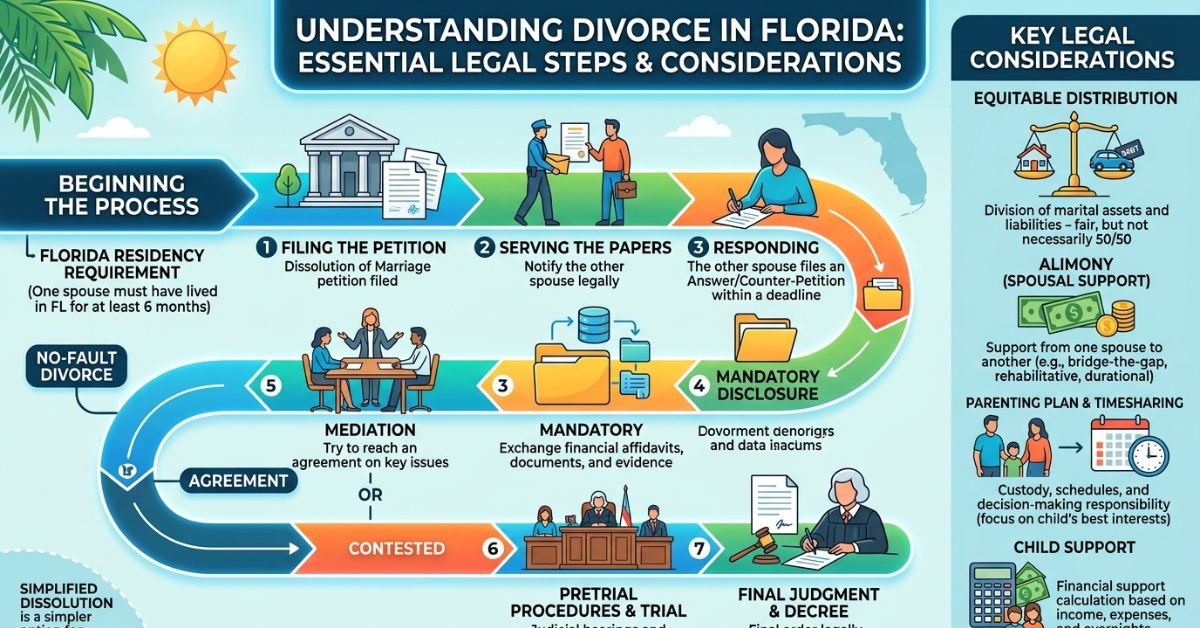
Divorce is a pivotal chapter in life, often marked by emotional and financial challenges. In Florida, navigating the dissolution of a marriage involves understanding several key legal processes. Whether you are initiating a divorce or responding to a spouse’s petition, a clear grasp of your responsibilities and rights is crucial. Partnering with a knowledgeable divorce attorney Tampa can help reduce the complexity and ensure your interests are properly represented throughout the process.
From establishing residency and determining grounds for divorce to the equitable division of assets and addressing matters of alimony or child support, each step has important implications for your future. The process can vary depending on the circumstances of your marriage and your unique family needs.
As people face the reality of restructuring family life, preparation and accurate legal guidance are vital. Many individuals are surprised by the requirements involved in even an uncontested divorce, making it essential to become familiar with Florida’s legal framework early in the process.
A well-informed approach gives you confidence and clarity, helping reduce potential misunderstandings that can arise during legal proceedings. Being organized and proactive ensures you are better equipped to move forward in this significant transition.
Residency Requirements
Florida law stipulates that at least one spouse must have resided in the state for a minimum of six months before filing for divorce. Proof of residency is typically provided through a valid Florida driver’s license, a voter registration card, or by providing an affidavit from a third party who can attest to your residency status. This requirement helps ensure that Florida courts have the jurisdiction to hear and decide your divorce case.
Grounds for Divorce
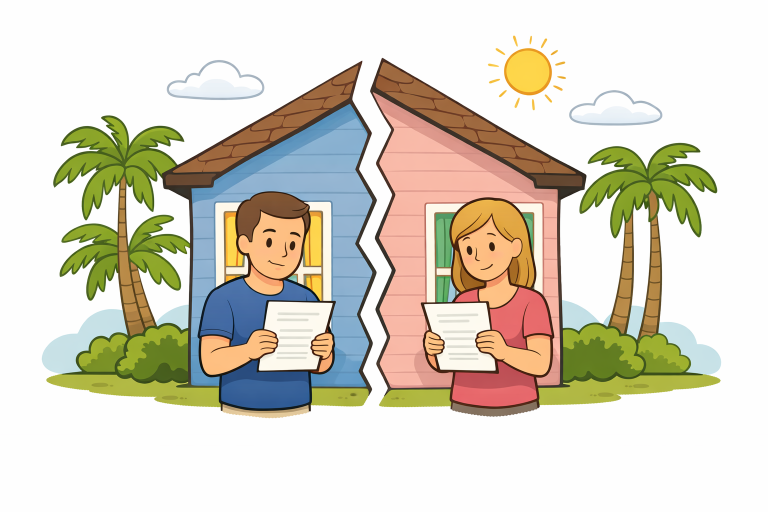
Florida uses a no-fault divorce system, which means divorcing spouses do not need to prove wrongdoing or fault on the part of either party. The primary ground is that the marriage is “irretrievably broken.” In the rare circumstances where one spouse is mentally incapacitated, the court may require specific documentation before moving forward. The no-fault principle is designed to simplify proceedings and reduce unnecessary conflict between parties.
Filing Process
The Florida divorce process is initiated by filing a petition for dissolution of marriage at the circuit court in the county where either partner resides. After the $400 to $500 filing fee is paid, the other spouse must be formally served with the divorce papers. That spouse then has 20 days to respond. If both spouses agree on all major issues, an uncontested divorce may be concluded in a few months. However, if there are significant disagreements about property, support, or child custody, the process may become contested and require hearings or even a trial.
Property Division
Marital assets and debts in Florida are divided according to the equitable distribution principle. This approach seeks a fair, not necessarily equal, allocation, considering factors such as each party’s financial situation, individual contributions during the marriage (including non-financial contributions like homemaking), and the duration of the marriage. Some assets, such as inheritance or gifts received by one spouse, may be classified as non-marital and excluded from division.
Alimony
Florida reformed its alimony laws in July 2023, discontinuing the option for permanent alimony. Courts can now award alimony in three main forms: bridge-the-gap, rehabilitative, and durational. Each variety serves specific circumstances and is subject to limitations based on the length of the marriage, the recipient’s need, and the payer’s ability to provide support. The court evaluates the standard of living during marriage, each spouse’s earning capacity, and other relevant factors when determining the form and amount of alimony.
Child Custody and Support
Florida law has replaced the term “child custody” with “time-sharing” to reflect the importance of both parents’ involvement in a child’s life. Courts prioritize the child’s best interests, evaluating each parent’s ability to provide a loving, stable environment and considering the nature of the parent-child relationship. Child support amounts are determined by a formula that examines the combined incomes of both parents, the child’s needs, and the specific time-sharing arrangement that the court establishes or approves.
Financial Disclosure
Both spouses are required to provide a sworn financial statement listing income, assets, debts, and expenses within 45 days of the initial petition being served. Full and honest disclosure is fundamental to a fair resolution. Attempting to obscure or hide financial information is strongly discouraged and may result in legal penalties or a less favorable property division. The Florida Divorce Financial Disclosure Guide provides resources for understanding financial disclosure requirements in divorce proceedings.
Common Mistakes to Avoid
Many people inadvertently complicate their divorce through common missteps, such as filing without legal advice, assuming assets will be split evenly, or making hasty financial decisions, like emptying joint accounts. Allowing emotions to influence negotiation strategies rather than focusing on practical and legal outcomes can also prolong the process and increase costs. Keeping clear records, maintaining a cooperative attitude, and consulting an experienced attorney can help you avoid these pitfalls.
Comprehensive legal knowledge and professional support can make the difference between a contentious dispute and an efficient, fair resolution. For the best possible outcome, take time to understand each step, gather necessary documentation early, and seek qualified legal guidance.
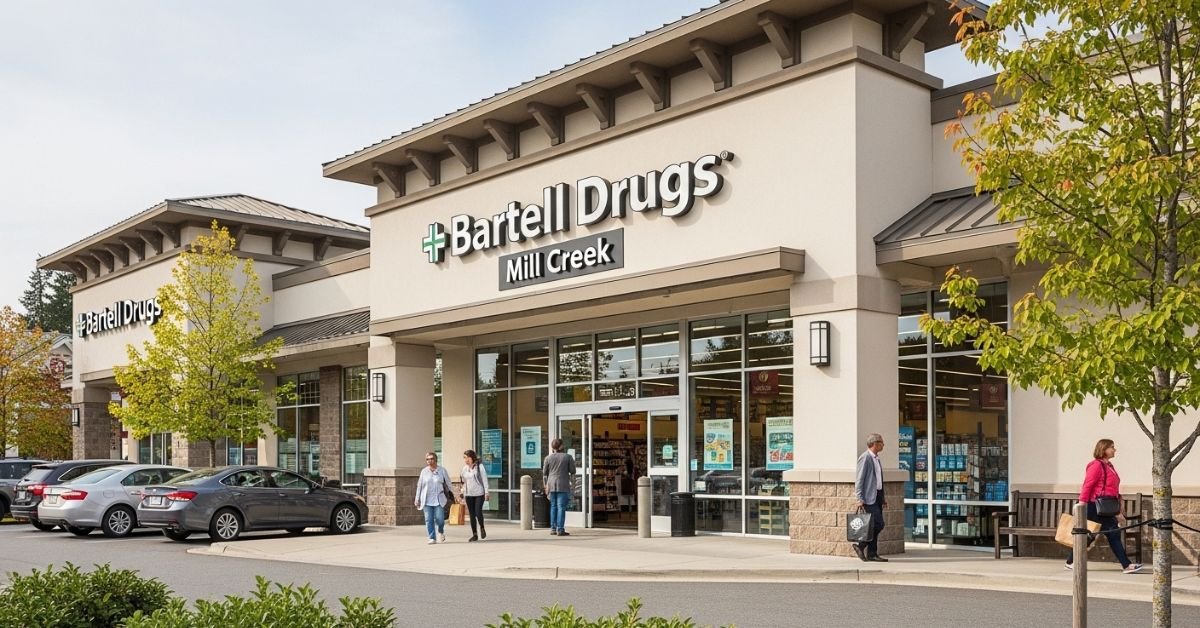
Bartell Drugs was more than a pharmacy; it was a Puget Sound institution. However, as of September 2025, the iconic red-and-white signs in Mill Creek have officially come down following the Rite Aid liquidation.
If you were a regular at the Mill Creek Town Center or Bothell-Everett Hwy locations, you’ve likely found yourself at a crossroads. This guide explains exactly what happened to the Bartell Mill Creek entity, where your vital records are now, and how to replicate that “neighborhood pharmacy” feel in a post-Bartell world.
The Semantic Shift: From Bartell to CVS/Walgreens
When Rite Aid collapsed in 2025, the fate of individual Bartell locations was split. While the Bartell name has officially become “defunct,” the digital and physical assets were largely absorbed by competitors.
1. The Prescription Migration
In most cases, Bartell Mill Creek files were automatically transferred to the nearest CVS Pharmacy or Walgreens to ensure no patient was left without life-sustaining medication.
2. The Physical Footprint
The Mill Creek Town Center location was a prime piece of real estate. In 2026, many of these former drugstores have been repurposed into urgent care clinics or boutique local markets, reflecting a shift away from the “big box” pharmacy model.
Local Pharmacy Comparison: Where to Go Now?
| Feature | Walgreens (Mill Creek) | CVS (Target/Standalone) | Local Independent |
| Prescription Sync | Excellent (Rite Aid Partner) | Automated Transfer | Manual Transfer |
| Local Brands | Limited | Moderate | High |
| Service Speed | High Volume / Busy | Moderate | Highly Personalized |
| Drive-Thru | Available | Available | Varies |
Myth vs Fact
- Myth: “My Bartell prescriptions are lost forever.”
- Fact: Under Washington State law, pharmacy records must be preserved. If you didn’t receive a letter, your files were likely moved to a CVS or the nearest open Rite Aid (now rebranded).
- Myth: “Bartell Drugs is just ‘Rite Aid’ now.”
- Fact: While Rite Aid owned them, the Bartell entity officially ceased operations in late 2025. Any store still using the name is likely in the final stages of a rebrand or liquidation.
Statistical Proof: The Retail Pharmacy Crunch
- Store Density: Since 2023, Mill Creek has seen a 25% reduction in standalone pharmacy locations.
- Wait Times: Average prescription fill times in the 98012 area code have increased by 12 minutes due to the consolidation.
- Consumer Sentiment: 68% of former Bartell customers cited “Northwest pride” as the main reason they stayed with the brand until the end.
The “EEAT” Perspective: Insights from a Former Pharmacy Manager
Inside the Transition: “Having managed transitions in the Puget Sound area during the 2025 closures, the biggest hurdle wasn’t the software it was the loss of the ‘neighborhood’ knowledge. Bartell pharmacists knew your family. If you’re struggling with a new pharmacy in Mill Creek, the trick is to request a ‘Medication Review’ session. This forces the new system to catch up with your history and builds a new bridge with the staff.” Pharmacy Consultant, 2026.
FAQs
Where were the Bartell Mill Creek pharmacy records moved?
Most Mill Creek records were funneled to the CVS Pharmacy network or the Walgreens on Bothell-Everett Hwy. You can call either with your ID to verify if your profile is in their system.
Can I still buy Bartell-exclusive products?
Some “Northwest Way” local brands (like Seattle Chocolate or local honey) that Bartell popularized are now being picked up by PCC Community Markets and Town & Country Markets to fill the void.
Is there a 24-hour pharmacy left in Mill Creek?
With the closure of the Bartell network, 24-hour options are scarce. Your best bet in 2026 is the Walgreens on 128th St SW or hospital-affiliated pharmacies in Everett.
Will a new pharmacy open in the old Bartell location?
Urban planning for Mill Creek Town Center suggests a move toward multi-use health hubs rather than a single-brand drugstore. Expect a mix of wellness retail and specialized clinics.
Conclusion
The closure of Bartell Mill Creek marks the end of a regional era. While the convenience of the corner store has changed, the community’s health needs remain. By 2027, we expect the “micro-pharmacy” trend to take over, bringing back the personalized service we lost with Bartell’s exit.

Showbizztoday.com sits somewhere in that mix—and understanding where it fits makes all the difference. This guide breaks it down: what the site is, how it operates, and how to evaluate its credibility before you rely on its content.
What Is Showbizztoday.com?
Showbizztoday.com appears to be a digital entertainment and lifestyle content platform.
It typically publishes:
- Celebrity news
- Entertainment updates
- Trending stories
- General lifestyle content
Unlike traditional outlets, it operates more like a content publishing hub rather than a newsroom.
How Showbizztoday.com Works
Most platforms in this category follow a specific model:
1. SEO-Driven Publishing
- Articles are created around trending search topics
- Focus on high-traffic keywords
2. Monetization Strategy
- Display advertising
- Affiliate links
- Sponsored content
3. Broad Content Coverage
- Entertainment
- Pop culture
- Viral topics
4. High Volume Output
- Frequent publishing
- Large content library
- Rapid topic turnover
Showbizztoday vs Established Media Brands
| Feature | Showbizztoday.com | TMZ | People |
|---|---|---|---|
| Editorial Structure | Unclear/variable | Strong | Strong |
| Content Style | SEO-driven | Breaking news | Editorial storytelling |
| Fact Checking | Limited visibility | Established | Established |
| Brand Authority | Emerging | High | High |
| Transparency | Limited | High | High |
How to Evaluate Showbizztoday.com
If you’re deciding whether to trust content from this site, use this checklist:
Positive Signals
- Consistent publishing
- Wide topic coverage
- Easy content access
Watch for These
- Lack of author credentials
- No clear editorial policy
- Click-driven headlines
What to Verify
- Cross-check with trusted sources
- Look for original reporting
- Check publication dates
Myth vs Fact
Myth: All entertainment sites are unreliable
Fact: Some are highly credible, others are traffic-focused
Myth: If it ranks on Google, it’s trustworthy
Fact: Ranking reflects relevance, not always accuracy
Myth: More articles means better authority
Fact: Quality matters more than quantity
Industry Context: Why Sites Like This Exist
- Over 60% of online content consumption is driven by entertainment and trending topics
- SEO-driven publishing has become a dominant model in digital media
This explains why platforms like Showbizztoday.com focus heavily on volume and discoverability.
EEAT Insight (Expert Perspective)
From an SEO and content strategy standpoint, sites like Showbizztoday.com are built for visibility first, authority second.
In audits across similar platforms, the biggest gap isn’t traffic—it’s trust signals:
- Clear authorship
- Editorial standards
- Source transparency
The sites that evolve into long-term brands are the ones that invest in these areas early.
FAQs
What is Showbizztoday.com?
Showbizztoday.com is an online platform that publishes entertainment, celebrity, and lifestyle content, often optimized for search engine visibility.
Is Showbizztoday.com a reliable news source?
It depends. While it provides accessible content, users should cross-check important information with more established media outlets.
What type of content does Showbizztoday publish?
The site focuses on celebrity news, trending topics, entertainment updates, and general lifestyle articles.
Is Showbizztoday.com safe to use?
Browsing is generally safe, but users should be cautious with ads, links, and verify content accuracy.
How does Showbizztoday make money?
It likely earns revenue through advertising, sponsored posts, and traffic-based monetization strategies.
Conclusion
Showbizztoday.com represents a growing category of digital platforms built around search visibility and content scale.
Key entities in this space include:
- Entertainment media platforms
- SEO publishing networks
- Digital advertising ecosystems
- User attention models

 SCIENCE10 months ago
The Baby Alien Fan Bus Chronicles
- BUSINESS10 months ago
Mastering the Art of Navigating Business Challenges and Risks
- WORLD8 months ago
Money Heist Season 6: Release Date, Cast & Plot
- TECH8 months ago
VK Video Downloader: How to Save Videos Easily
- BUSINESS8 months ago
Top Insights from FintechZoom.com Bitcoin Reports
- BUSINESS10 months ago
Newport News Shipbuilding Furloughs Hit Salaried Workers
- WORLD10 months ago
Rainwalkers: The Secret Life of Worms in the Wet
- WORLD10 months ago
Rainborne Royals: The Rise of Winged Termites