
BLOG
Life Income Fund (LIF): A Complete Guide to Rules, Withdrawals & Strategy


Life Income Fund is a registered retirement income account that holds funds originally derived from an employer pension plan. The defining characteristic of a LIF is that it contains “locked-in” funds, meaning your withdrawal flexibility is restricted by pension legislation designed to ensure the money lasts throughout your retirement years.
When you leave an employer with a defined contribution pension plan or deferred profit-sharing plan, those funds typically transfer into a locked-in retirement account (LIRA). Once you reach retirement age (typically between 55 and 71, depending on your province), you can convert your LIRA into a LIF to begin receiving retirement income.
The Source of LIF Funds: Pensions and LIRAs
The journey of locked-in pension funds follows a specific path:
- Employer Pension Plan: Your locked-in funds originate from a workplace pension plan or deferred profit-sharing plan
- LIRA Transfer: When you leave your employer, pension funds transfer to a locked-in retirement account where they grow tax-sheltered
- LIF Conversion: At retirement age, you convert your LIRA to a LIF to start receiving income while maintaining tax-deferred growth on the remaining balance
This three-stage process ensures pension funds remain protected and dedicated to retirement income rather than being withdrawn prematurely.
LIF vs. RRIF vs. Annuity: Key Differences
Understanding how a LIF compares to other retirement income options helps you make informed decisions:
| Feature | Life Income Fund (LIF) | RRIF | Life Annuity |
|---|---|---|---|
| Source of Funds | Locked-in pension money only | Any RRSP funds | RRSP, LIRA, or LIF funds |
| Minimum Withdrawal | Yes, based on age | Yes, based on age | Fixed payment schedule |
| Maximum Withdrawal | Yes, capped annually | No maximum | No flexibility (fixed) |
| Investment Control | Full control over investments | Full control over investments | No control (insurance company manages) |
| Market Risk | You bear investment risk | You bear investment risk | Insurance company bears risk |
| Longevity Protection | Risk of outliving funds | Risk of outliving funds | Guaranteed income for life |
| Estate Value | Remaining balance to beneficiaries | Remaining balance to beneficiaries | Typically nothing (unless guaranteed period) |
| Creditor Protection | Protected from creditors | Limited protection | Protected from creditors |
The LIF occupies a middle ground: it offers more control than an annuity but less withdrawal flexibility than a standard RRIF.
How LIF Withdrawals Work: Minimums and Maximums
The dual withdrawal limits are what make LIFs unique and sometimes challenging to manage. You must withdraw at least the minimum amount each year, but you cannot exceed the maximum—even if you urgently need more funds.

Calculating Your LIF Minimum Withdrawal
Your minimum LIF withdrawal is calculated using a prescribed factor based on your age at the beginning of each year. Here’s how the calculation works:
Step-by-Step Minimum Withdrawal Example:
- Determine your age on January 1st of the withdrawal year
- Find your prescribed factor from the government table (example: age 65 = 4.00%)
- Multiply your LIF’s January 1st market value by the prescribed factor
- Result equals your minimum annual withdrawal
Practical Example:
- Sarah is 65 years old on January 1, 2026
- Her LIF balance on January 1, 2026 is $400,000
- Prescribed factor at age 65: 4.00%
- Minimum withdrawal: $400,000 × 4.00% = $16,000
Sarah must withdraw at least $16,000 during 2026, but she can choose to receive it as a lump sum, monthly payments of $1,333, or any other schedule that suits her cash flow needs.
Key Prescribed Factors by Age:
- Age 55: 2.86%
- Age 60: 3.33%
- Age 65: 4.00%
- Age 70: 5.00%
- Age 75: 6.82%
- Age 80: 8.99%
- Age 90: 16.34%
Understanding the LIF Maximum Withdrawal Cap
The maximum withdrawal is more complex, calculated using three factors to ensure your capital lasts:
- Your age at the start of the year
- Your LIF’s market value on January 1st
- The CANSIM rate (a reference interest rate published by Statistics Canada)
The maximum withdrawal calculation uses investment return assumptions and life expectancy tables. While your financial institution performs this calculation, understanding that it exists is crucial for retirement planning. The maximum typically ranges from 6% to 10% of your account value in your 60s and early 70s.
Why Maximum Withdrawals Exist: Provincial pension legislation imposes this cap to prevent retirees from depleting locked-in funds too quickly, ensuring money remains available in later retirement years when alternative income sources may be limited.
The Tax Impact of LIF Withdrawals
Every dollar withdrawn from your LIF is added to your taxable income for the year and taxed at your marginal tax rate. Your financial institution will issue a T4-RIF slip each February showing your total withdrawals for tax reporting.
Withholding Tax Considerations:
- Minimum withdrawals: No withholding tax required if properly structured
- Withdrawals above minimum: Subject to withholding tax (10-30% depending on amount)
- The withholding is a prepayment; your actual tax owed depends on your total income and tax bracket
Tax Planning Strategy: Consider your total retirement income (CPP, OAS, other pensions, investment income) when deciding how much to withdraw from your LIF. Taking only the minimum early in retirement while your other income is higher, then increasing LIF withdrawals after age 65 when you may be in a lower tax bracket, can reduce lifetime taxes paid.
Provincial LIF Rules and Variations
LIF regulations are set by provincial pension legislation, creating significant differences across Canada. Understanding your province’s specific rules is essential.
Key Provincial Differences Table
| Province | Early Retirement Age | Unlocking Provisions | Special Rules |
|---|---|---|---|
| British Columbia | 55 | Small balance, financial hardship, shortened life expectancy, non-resident | Must convert to annuity by age 80 in some cases |
| Alberta | 50 | 50% one-time unlock at age 50+, small balance, financial hardship, shortened life expectancy, non-resident | Most flexible unlocking rules |
| Saskatchewan | 55 | Small balance, financial hardship, shortened life expectancy, non-resident | Offers Prescribed RRIF (PRIF) as alternative |
| Manitoba | 55 | 50% one-time unlock at age 55+, small balance, financial hardship, shortened life expectancy, non-resident | Among the most flexible provinces |
| Ontario | 55 | Small balance, financial hardship, shortened life expectancy, non-resident | Most common provincial jurisdiction |
| Quebec | 55 | Small balance, financial hardship, shortened life expectancy, non-resident | Separate LRSP rules apply |
| Newfoundland & Labrador | 54 | Small balance, financial hardship, shortened life expectancy, non-resident | Must purchase annuity at age 80 |
Federal Jurisdiction: If your pension was federally regulated (banking, telecommunications, interprovincial transport), federal unlocking rules apply, which are generally more restrictive than provincial rules.
How to Unlock LIF Funds
While LIFs are designed to be locked-in, several legitimate unlocking options exist:
1. Small Balance Unlocking If your total locked-in retirement savings fall below a threshold (typically $12,000-$16,500 depending on province), you can unlock and withdraw the entire amount. This is taxable income in the withdrawal year.
2. Financial Hardship Most provinces allow unlocking for specific hardship situations:
- Low expected income (typically below 75% of Year’s Maximum Pensionable Earnings)
- Risk of eviction or mortgage foreclosure
- Medical expenses exceeding a percentage of income
- Modification costs for disability-related home or vehicle needs
3. Shortened Life Expectancy If a physician certifies your life expectancy is reduced to less than two years, you can unlock your entire LIF balance.
4. Non-Resident of Canada If you permanently leave Canada and become a non-resident for tax purposes (typically two consecutive years), most provinces allow you to unlock your LIF funds. The full amount is subject to 25% withholding tax for non-residents.
5. One-Time 50% Unlock (Alberta & Manitoba) Residents of Alberta (age 50+) and Manitoba (age 55+) can make a one-time election to unlock up to 50% of their locked-in balance. This provides significantly more flexibility than other provinces.
Setting Up and Managing Your LIF
Converting your LIRA to a LIF requires careful planning and proper documentation. Here’s exactly what to expect.
The Step-by-Step Process to Convert to a LIF
Step 1: Determine Your Timing You can convert your LIRA to a LIF once you reach your province’s early retirement age (typically 55, but 50 in Alberta and 54 in Newfoundland). You must convert by December 31st of the year you turn 71.
Step 2: Choose Your Financial Institution Select where you want to hold your LIF. You can transfer to a different institution than your current LIRA provider if you prefer different investment options or lower fees.
Step 3: Obtain Spousal Consent (If Applicable) Most provinces require your spouse or common-law partner to sign a waiver if you’re naming someone other than them as beneficiary. This protects spousal retirement security.
Step 4: Complete LIF Application Forms Your financial institution will provide:
- LIF account application
- Transfer authorization from your LIRA
- Beneficiary designation form
- Spousal waiver (if required)
- Provincial pension legislation forms
Step 5: Select Your Investments Choose how your LIF funds will be invested. Options include mutual funds, ETFs, GICs, bonds, and individual stocks—the same qualifying investments allowed in RRSPs and RRIFs.
Step 6: Set Your Withdrawal Schedule Decide whether you want monthly income, quarterly payments, annual lump sum, or a custom schedule. You can change this arrangement annually.
Processing typically takes 2-4 weeks from completed application to active LIF account with funds transferred.
Eligible LIF Investments
LIFs can hold the same qualified investments as RRSPs and RRIFs, providing broad investment flexibility:
Permitted Investments:
- Cash and GICs
- Mutual funds and segregated funds
- Exchange-traded funds (ETFs)
- Government and corporate bonds
- Canadian and foreign stocks listed on designated exchanges
- Certain mortgages and real estate investment trusts

Prohibited Investments:
- Shares in private corporations you control
- Personal mortgages
- Personal loans
- Certain partnerships and trusts where you’re a beneficiary
- Collectibles and commodities
Your investment strategy should balance growth potential with the need for stable income and capital preservation, especially as you approach the age when maximum withdrawals become more restrictive.
Advantages, Disadvantages, and Key Considerations
A LIF isn’t right for everyone. Weighing the benefits against limitations helps you decide if it aligns with your retirement goals.
Benefits of Choosing a LIF
Investment Control and Growth Potential Unlike an annuity where the insurance company controls investments, you direct how your LIF funds are invested. This allows you to pursue growth through equities in early retirement, potentially increasing your retirement income over time.
Tax-Sheltered Growth Investment earnings within your LIF grow tax-deferred. You only pay tax when you make withdrawals, allowing compound growth to work more effectively than in taxable accounts.
Creditor Protection LIF funds receive strong creditor protection in most provinces. In bankruptcy or creditor action, your locked-in retirement savings typically remain safe, unlike regular investment accounts.
Estate Preservation If you pass away with a balance remaining in your LIF, the funds transfer to your named beneficiary or estate. This allows you to leave a legacy, whereas most annuity payments cease at death (unless you purchased guaranteed period riders at lower payment rates).
Flexibility in Withdrawal Timing Within the minimum-maximum range, you control when and how much to withdraw each year. You can adjust based on your spending needs, tax planning, and market conditions.
Potential Drawbacks and Risks
Withdrawal Limits Reduce Flexibility The maximum withdrawal cap means you cannot access all your money even in emergencies. If you need a large sum for medical expenses or other urgent needs, you may be restricted.
Market Volatility Affects Income Your LIF balance fluctuates with market performance. A market downturn early in retirement combined with required minimum withdrawals can significantly reduce your account value, limiting future income potential.
Complexity and Administrative Requirements Managing a LIF requires more attention than an annuity’s automatic payments. You must track minimum and maximum limits, make annual withdrawal decisions, rebalance investments, and understand changing provincial regulations.
Risk of Outliving Your Savings Unlike a life annuity that guarantees income for life, a LIF can be depleted. If you live well into your 90s and your investments underperform, you may exhaust your LIF balance when you need it most.
No Additional Contributions Once your LIRA converts to a LIF, you cannot make further contributions. Unlike an RRSP where you can continue adding savings, a LIF is withdrawal-only.
Frequently Asked Questions (FAQ)
Q: At what age must I convert my LIRA to a LIF?
You must convert your LIRA to an income vehicle (LIF, annuity, or RRIF if unlocking provisions apply) by December 31st of the year you turn 71. However, you can convert earlier—typically from age 55 onward, depending on your province’s early retirement age rules.
Q: Can I withdraw all my money from a LIF at once?
No, the maximum withdrawal cap prevents you from accessing your entire LIF balance in a single year. The annual maximum typically ranges from 6-10% of your account value. This restriction exists to preserve capital throughout your retirement. Limited unlocking provisions exist for financial hardship, shortened life expectancy, or if you become a non-resident of Canada.
Q: What happens to my LIF when I die?
The remaining balance in your LIF transfers to your named beneficiary (typically your spouse) or to your estate if no beneficiary is designated. If your spouse is the beneficiary, they can transfer the funds tax-deferred to their own LIF, RRIF, or annuity. Non-spouse beneficiaries receive the value as taxable income. Your estate is responsible for the tax on any LIF balance at death.
Q: How is a LIF different from my personal RRSP or RRIF?
A LIF contains locked-in pension funds and has both minimum and maximum withdrawal limits set by provincial pension legislation. A RRIF holds your personal RRSP savings and has only a minimum withdrawal requirement—no maximum. You have complete freedom to withdraw any amount from a RRIF at any time, whereas LIF withdrawals are capped annually.
Q: Can I still contribute to a LIF?
No, you cannot make contributions to a LIF. It’s an income-only account. The only funds that can enter a LIF are transfers from other locked-in accounts (LIRAs, other LIFs, pension plan transfers) or investment growth generated within the account itself.
Q: What if I need more money than the LIF maximum allows?
You have several options if you need funds beyond the maximum withdrawal:
- Use the provincial unlocking provisions if you qualify (financial hardship, small balance, shortened life expectancy, non-resident status)
- Draw from other retirement savings that aren’t locked-in (RRSPs, RRIFs, TFSAs)
- In Alberta or Manitoba, use the one-time 50% unlock provision if you haven’t already
- Consider a home equity line of credit or other financing options
Planning ahead and maintaining non-locked-in retirement savings alongside your LIF provides greater financial flexibility.
Making Your LIF Decision
A Life Income Fund offers investment control and growth potential while providing retirement income from your locked-in pension funds. The provincial withdrawal caps and regulatory complexity require more active management than simpler alternatives like annuities, but they preserve your ability to leave an estate and adjust withdrawals within limits.
Before converting your LIRA to a LIF, consider working with a retirement planning professional who understands your province’s specific regulations and can model different withdrawal strategies. Compare a LIF strategy against purchasing a life annuity or combining both approaches—using part of your locked-in funds for guaranteed annuity income and keeping the remainder in a LIF for flexibility and growth.
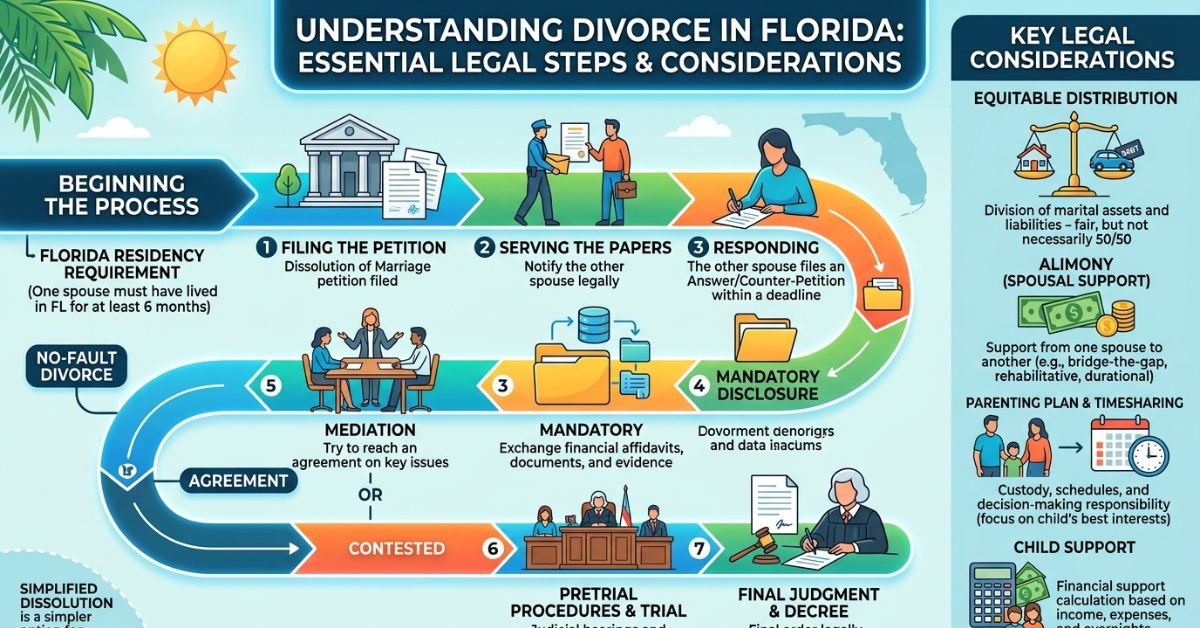
Divorce is a pivotal chapter in life, often marked by emotional and financial challenges. In Florida, navigating the dissolution of a marriage involves understanding several key legal processes. Whether you are initiating a divorce or responding to a spouse’s petition, a clear grasp of your responsibilities and rights is crucial. Partnering with a knowledgeable divorce attorney Tampa can help reduce the complexity and ensure your interests are properly represented throughout the process.
From establishing residency and determining grounds for divorce to the equitable division of assets and addressing matters of alimony or child support, each step has important implications for your future. The process can vary depending on the circumstances of your marriage and your unique family needs.
As people face the reality of restructuring family life, preparation and accurate legal guidance are vital. Many individuals are surprised by the requirements involved in even an uncontested divorce, making it essential to become familiar with Florida’s legal framework early in the process.
A well-informed approach gives you confidence and clarity, helping reduce potential misunderstandings that can arise during legal proceedings. Being organized and proactive ensures you are better equipped to move forward in this significant transition.
Residency Requirements
Florida law stipulates that at least one spouse must have resided in the state for a minimum of six months before filing for divorce. Proof of residency is typically provided through a valid Florida driver’s license, a voter registration card, or by providing an affidavit from a third party who can attest to your residency status. This requirement helps ensure that Florida courts have the jurisdiction to hear and decide your divorce case.

Grounds for Divorce
Florida uses a no-fault divorce system, which means divorcing spouses do not need to prove wrongdoing or fault on the part of either party. The primary ground is that the marriage is “irretrievably broken.” In the rare circumstances where one spouse is mentally incapacitated, the court may require specific documentation before moving forward. The no-fault principle is designed to simplify proceedings and reduce unnecessary conflict between parties.
Filing Process
The Florida divorce process is initiated by filing a petition for dissolution of marriage at the circuit court in the county where either partner resides. After the $400 to $500 filing fee is paid, the other spouse must be formally served with the divorce papers. That spouse then has 20 days to respond. If both spouses agree on all major issues, an uncontested divorce may be concluded in a few months. However, if there are significant disagreements about property, support, or child custody, the process may become contested and require hearings or even a trial.
Property Division
Marital assets and debts in Florida are divided according to the equitable distribution principle. This approach seeks a fair, not necessarily equal, allocation, considering factors such as each party’s financial situation, individual contributions during the marriage (including non-financial contributions like homemaking), and the duration of the marriage. Some assets, such as inheritance or gifts received by one spouse, may be classified as non-marital and excluded from division.
Alimony
Florida reformed its alimony laws in July 2023, discontinuing the option for permanent alimony. Courts can now award alimony in three main forms: bridge-the-gap, rehabilitative, and durational. Each variety serves specific circumstances and is subject to limitations based on the length of the marriage, the recipient’s need, and the payer’s ability to provide support. The court evaluates the standard of living during marriage, each spouse’s earning capacity, and other relevant factors when determining the form and amount of alimony.
Child Custody and Support
Florida law has replaced the term “child custody” with “time-sharing” to reflect the importance of both parents’ involvement in a child’s life. Courts prioritize the child’s best interests, evaluating each parent’s ability to provide a loving, stable environment and considering the nature of the parent-child relationship. Child support amounts are determined by a formula that examines the combined incomes of both parents, the child’s needs, and the specific time-sharing arrangement that the court establishes or approves.
Financial Disclosure
Both spouses are required to provide a sworn financial statement listing income, assets, debts, and expenses within 45 days of the initial petition being served. Full and honest disclosure is fundamental to a fair resolution. Attempting to obscure or hide financial information is strongly discouraged and may result in legal penalties or a less favorable property division. The Florida Divorce Financial Disclosure Guide provides resources for understanding financial disclosure requirements in divorce proceedings.
Common Mistakes to Avoid
Many people inadvertently complicate their divorce through common missteps, such as filing without legal advice, assuming assets will be split evenly, or making hasty financial decisions, like emptying joint accounts. Allowing emotions to influence negotiation strategies rather than focusing on practical and legal outcomes can also prolong the process and increase costs. Keeping clear records, maintaining a cooperative attitude, and consulting an experienced attorney can help you avoid these pitfalls.
Comprehensive legal knowledge and professional support can make the difference between a contentious dispute and an efficient, fair resolution. For the best possible outcome, take time to understand each step, gather necessary documentation early, and seek qualified legal guidance.

Bartell Drugs was more than a pharmacy; it was a Puget Sound institution. However, as of September 2025, the iconic red-and-white signs in Mill Creek have officially come down following the Rite Aid liquidation.
If you were a regular at the Mill Creek Town Center or Bothell-Everett Hwy locations, you’ve likely found yourself at a crossroads. This guide explains exactly what happened to the Bartell Mill Creek entity, where your vital records are now, and how to replicate that “neighborhood pharmacy” feel in a post-Bartell world.
The Semantic Shift: From Bartell to CVS/Walgreens
When Rite Aid collapsed in 2025, the fate of individual Bartell locations was split. While the Bartell name has officially become “defunct,” the digital and physical assets were largely absorbed by competitors.
1. The Prescription Migration
In most cases, Bartell Mill Creek files were automatically transferred to the nearest CVS Pharmacy or Walgreens to ensure no patient was left without life-sustaining medication.
2. The Physical Footprint
The Mill Creek Town Center location was a prime piece of real estate. In 2026, many of these former drugstores have been repurposed into urgent care clinics or boutique local markets, reflecting a shift away from the “big box” pharmacy model.
Local Pharmacy Comparison: Where to Go Now?
| Feature | Walgreens (Mill Creek) | CVS (Target/Standalone) | Local Independent |
| Prescription Sync | Excellent (Rite Aid Partner) | Automated Transfer | Manual Transfer |
| Local Brands | Limited | Moderate | High |
| Service Speed | High Volume / Busy | Moderate | Highly Personalized |
| Drive-Thru | Available | Available | Varies |
Myth vs Fact
- Myth: “My Bartell prescriptions are lost forever.”
- Fact: Under Washington State law, pharmacy records must be preserved. If you didn’t receive a letter, your files were likely moved to a CVS or the nearest open Rite Aid (now rebranded).
- Myth: “Bartell Drugs is just ‘Rite Aid’ now.”
- Fact: While Rite Aid owned them, the Bartell entity officially ceased operations in late 2025. Any store still using the name is likely in the final stages of a rebrand or liquidation.
Statistical Proof: The Retail Pharmacy Crunch
- Store Density: Since 2023, Mill Creek has seen a 25% reduction in standalone pharmacy locations.
- Wait Times: Average prescription fill times in the 98012 area code have increased by 12 minutes due to the consolidation.
- Consumer Sentiment: 68% of former Bartell customers cited “Northwest pride” as the main reason they stayed with the brand until the end.
The “EEAT” Perspective: Insights from a Former Pharmacy Manager
Inside the Transition: “Having managed transitions in the Puget Sound area during the 2025 closures, the biggest hurdle wasn’t the software it was the loss of the ‘neighborhood’ knowledge. Bartell pharmacists knew your family. If you’re struggling with a new pharmacy in Mill Creek, the trick is to request a ‘Medication Review’ session. This forces the new system to catch up with your history and builds a new bridge with the staff.” Pharmacy Consultant, 2026.
FAQs
Where were the Bartell Mill Creek pharmacy records moved?
Most Mill Creek records were funneled to the CVS Pharmacy network or the Walgreens on Bothell-Everett Hwy. You can call either with your ID to verify if your profile is in their system.
Can I still buy Bartell-exclusive products?
Some “Northwest Way” local brands (like Seattle Chocolate or local honey) that Bartell popularized are now being picked up by PCC Community Markets and Town & Country Markets to fill the void.
Is there a 24-hour pharmacy left in Mill Creek?
With the closure of the Bartell network, 24-hour options are scarce. Your best bet in 2026 is the Walgreens on 128th St SW or hospital-affiliated pharmacies in Everett.
Will a new pharmacy open in the old Bartell location?
Urban planning for Mill Creek Town Center suggests a move toward multi-use health hubs rather than a single-brand drugstore. Expect a mix of wellness retail and specialized clinics.
Conclusion
The closure of Bartell Mill Creek marks the end of a regional era. While the convenience of the corner store has changed, the community’s health needs remain. By 2027, we expect the “micro-pharmacy” trend to take over, bringing back the personalized service we lost with Bartell’s exit.

Showbizztoday.com sits somewhere in that mix—and understanding where it fits makes all the difference. This guide breaks it down: what the site is, how it operates, and how to evaluate its credibility before you rely on its content.
What Is Showbizztoday.com?
Showbizztoday.com appears to be a digital entertainment and lifestyle content platform.
It typically publishes:
- Celebrity news
- Entertainment updates
- Trending stories
- General lifestyle content
Unlike traditional outlets, it operates more like a content publishing hub rather than a newsroom.
How Showbizztoday.com Works
Most platforms in this category follow a specific model:
1. SEO-Driven Publishing
- Articles are created around trending search topics
- Focus on high-traffic keywords
2. Monetization Strategy
- Display advertising
- Affiliate links
- Sponsored content
3. Broad Content Coverage
- Entertainment
- Pop culture
- Viral topics
4. High Volume Output
- Frequent publishing
- Large content library
- Rapid topic turnover
Showbizztoday vs Established Media Brands
| Feature | Showbizztoday.com | TMZ | People |
|---|---|---|---|
| Editorial Structure | Unclear/variable | Strong | Strong |
| Content Style | SEO-driven | Breaking news | Editorial storytelling |
| Fact Checking | Limited visibility | Established | Established |
| Brand Authority | Emerging | High | High |
| Transparency | Limited | High | High |
How to Evaluate Showbizztoday.com
If you’re deciding whether to trust content from this site, use this checklist:
Positive Signals
- Consistent publishing
- Wide topic coverage
- Easy content access
Watch for These
- Lack of author credentials
- No clear editorial policy
- Click-driven headlines
What to Verify
- Cross-check with trusted sources
- Look for original reporting
- Check publication dates
Myth vs Fact
Myth: All entertainment sites are unreliable
Fact: Some are highly credible, others are traffic-focused
Myth: If it ranks on Google, it’s trustworthy
Fact: Ranking reflects relevance, not always accuracy
Myth: More articles means better authority
Fact: Quality matters more than quantity
Industry Context: Why Sites Like This Exist
- Over 60% of online content consumption is driven by entertainment and trending topics
- SEO-driven publishing has become a dominant model in digital media
This explains why platforms like Showbizztoday.com focus heavily on volume and discoverability.
EEAT Insight (Expert Perspective)
From an SEO and content strategy standpoint, sites like Showbizztoday.com are built for visibility first, authority second.
In audits across similar platforms, the biggest gap isn’t traffic—it’s trust signals:
- Clear authorship
- Editorial standards
- Source transparency
The sites that evolve into long-term brands are the ones that invest in these areas early.
FAQs
What is Showbizztoday.com?
Showbizztoday.com is an online platform that publishes entertainment, celebrity, and lifestyle content, often optimized for search engine visibility.
Is Showbizztoday.com a reliable news source?
It depends. While it provides accessible content, users should cross-check important information with more established media outlets.
What type of content does Showbizztoday publish?
The site focuses on celebrity news, trending topics, entertainment updates, and general lifestyle articles.
Is Showbizztoday.com safe to use?
Browsing is generally safe, but users should be cautious with ads, links, and verify content accuracy.
How does Showbizztoday make money?
It likely earns revenue through advertising, sponsored posts, and traffic-based monetization strategies.
Conclusion
Showbizztoday.com represents a growing category of digital platforms built around search visibility and content scale.
Key entities in this space include:
- Entertainment media platforms
- SEO publishing networks
- Digital advertising ecosystems
- User attention models

 SCIENCE10 months ago
The Baby Alien Fan Bus Chronicles
- BUSINESS10 months ago
Mastering the Art of Navigating Business Challenges and Risks
- WORLD8 months ago
Money Heist Season 6: Release Date, Cast & Plot
- TECH8 months ago
VK Video Downloader: How to Save Videos Easily
- BUSINESS7 months ago
Top Insights from FintechZoom.com Bitcoin Reports
- BUSINESS10 months ago
Newport News Shipbuilding Furloughs Hit Salaried Workers
- WORLD10 months ago
Rainwalkers: The Secret Life of Worms in the Wet
- WORLD10 months ago
Rainborne Royals: The Rise of Winged Termites