
BLOG
United Flight UA109 Diversion: Why the Munich–Washington Flight Turned Back to Dublin


On October 30, 2025, United Flight UA109 made an unscheduled diversion to Ireland mid-way through its transatlantic journey. The Munich-to-Washington service landed safely at Dublin Airport after a crew medical issue prompted a precautionary decision. No passengers were injured, and the delay lasted approximately two hours.
Incident Overview: A Routine Safety Decision Mid-Atlantic
The aircraft operating United flight UA109 was a Boeing 787-8 Dreamliner, departing from Munich Airport (MUC) bound for Washington Dulles International Airport (IAD).
Roughly 90 minutes into the transatlantic flight, the crew reported a medical issue involving a flight attendant. As a precaution — and in compliance with aviation safety regulations — the aircraft diverted to Dublin Airport (DUB).
Importantly:
- There was no passenger medical emergency
- There were no injuries
- The landing was precautionary, not an emergency evacuation
The event has since been described by aviation analysts as a textbook example of “safety over schedule.”
Exact Timeline of Events – October 30, 2025
Departure from Munich
- 09:00 AM (local time) – UA109 departed Munich Airport.
- The aircraft climbed normally to cruising altitude (~40,000 feet).
- Initial routing proceeded westbound over Europe toward the North Atlantic.
Medical Incident and Decision to Divert
Approximately 90 minutes into the flight:
- A flight attendant experienced severe discomfort related to a blister.
- The condition affected the crew member’s ability to perform required safety duties.
- Under international aviation rules, all minimum cabin crew must remain fully capable.
The captain coordinated with United operations and elected to divert.
Mid-Atlantic Turn and Landing
- The aircraft performed a controlled U-turn over the North Atlantic.
- It rerouted toward Ireland as the nearest suitable alternate airport.
- ~3:00 PM GMT – UA109 landed safely at Dublin Airport.
- Emergency vehicles were positioned on standby, as is routine protocol.
There was no distress signal issued and no emergency slide deployment.
Flight Path: Where UA109 Turned Back

The diversion occurred west of Ireland over the North Atlantic — a standard corridor for Munich-to-Washington traffic. Dublin’s geographic position makes it a primary diversion point for westbound transatlantic routes.
Why Dublin? The Role of ETOPS and Alternate Airports
Transatlantic flights operated by twin-engine aircraft like the Boeing 787 are governed by ETOPS (Extended Twin-Engine Operations) rules.
These regulations require aircraft to remain within a specific flying time of a suitable alternate airport at all times.
Dublin is:
- Strategically located along North Atlantic tracks
- Fully equipped for wide-body aircraft
- Certified for ETOPS diversion handling
- Capable of rapid medical response and ground support
For flights departing Central Europe toward North America, Dublin is one of the most common alternate options.
Why This Diversion Was Different: Crew vs Passenger Emergency
Many online reports initially speculated about a passenger health emergency. That was incorrect.
The Critical Role of Crew Fitness
Aviation regulations require:
- Minimum cabin crew numbers
- Full operational capability of all safety-critical staff
- Immediate action if a crew member becomes incapacitated
Even if a medical issue is not life-threatening, a crew member unable to perform duties renders the flight non-compliant.
This was a regulatory compliance diversion — not a dramatic emergency.
Authorities such as the FAA and EASA require strict adherence to crew fitness standards on international routes.
Diversion vs Emergency Landing: What’s the Difference?
Understanding terminology matters.
Diversion
- Planned rerouting to an alternate airport
- Conducted in a controlled manner
- Often precautionary
- No imminent danger required
Emergency Landing
- Immediate threat (fire, depressurization, mechanical failure)
- May involve distress signals
- Higher urgency and risk
United flight UA109 executed a diversion — not an emergency landing.
Passenger Experience and Journey Resumption
Passengers remained onboard during the Dublin stop.
Crew and ground staff:
- Provided announcements explaining the situation
- Conducted a medical assessment of the affected crew member
- Completed operational checks
- Coordinated departure clearance
The flight departed Dublin at approximately 4:15 PM GMT and later arrived at Washington Dulles around 6:30 PM local time.
Total delay: roughly two hours.
Given the circumstances, the disruption was minimal.
Correction of Inaccurate Reports
Some lower-quality articles incorrectly stated:
- The aircraft was a Boeing 777-200ER
- The diversion occurred on a different date
- The route involved different cities
Flight data confirms:
- Aircraft: Boeing 787-8 Dreamliner
- Route: Munich → Washington Dulles
- Date: October 30, 2025
- Diversion: Dublin Airport
Accurate reporting is critical in aviation incidents, where misinformation can spread rapidly.
Broader Lessons in Aviation Safety
Events like the United flight UA109 diversion highlight how aviation safety systems function proactively.
Key takeaways:
- Airlines prioritize regulatory compliance over schedule
- Crew incapacitation protocols are strictly enforced
- ETOPS planning ensures alternate airports are always available
- Diversions are often precautionary, not catastrophic
Modern commercial aviation remains one of the safest modes of transportation precisely because these safeguards exist.
A two-hour delay is a small price for maintaining operational safety standards.
Frequently Asked Questions About United Flight UA109 Diversion
Why did United flight UA109 divert to Dublin?
United flight UA109 diverted due to a medical issue affecting a flight crew member. Aviation regulations require all minimum cabin crew to be fully capable of performing safety duties.
Where did UA109 divert to?
The flight diverted to Dublin Airport in Ireland.
Was anyone injured on United 109?
No. There were no passenger injuries reported.
How long was the delay?
Approximately two hours.
What type of aircraft operated UA109?
A Boeing 787-8 Dreamliner.
Is Dublin a common diversion airport?
Yes. Dublin is a major ETOPS alternate for transatlantic flights between Europe and North America.
Final Assessment
The United flight UA109 diversion was not a dramatic emergency but rather a controlled, precautionary compliance decision.
From departure at Munich Airport to safe arrival at Washington Dulles International Airport, the flight demonstrates how aviation safety systems work exactly as designed.
When crews are not fully fit to perform safety duties, aircraft divert.
And that — more than anything — is what keeps transatlantic air travel safe.

Merfez isn’t one thing. In 2026 it’s a flexible word being used across four very different contexts each legitimate in its own corner of the internet and real world. Some people know it as a handy content hub. Others as a quiet Turkish coastal village. A growing group uses it as a simple productivity framework. And on social feeds it’s become shorthand for a certain thoughtful, expressive creative mood.
If you’re here because you want straight answers on what merfez actually refers to, how the meanings differ, which one might matter to you, and how to engage with each, this is the guide. No vague overviews just the entities, the details, and the practical context you need.
The Four Meanings of Merfez in 2026
Merfez functions as a modern polysemous term. Here’s the clean breakdown:
- Merfez as a Multi-Niche Digital Content Platform A free publishing site focused on “Ideas That Matter” tech, health, business, lifestyle, fashion. It aggregates expert-written long-form articles and serves as a one-stop hub for readers who want depth without niche silos.
- Merfez as a Coastal Town in Turkey A historic Mediterranean village on the southern coast (roughly 70 km from Adana airport). Layered with Phoenician, Byzantine, Ottoman, and Venetian influences known for turquoise coves, quiet beaches, and cultural heritage sites.
- Merfez as a Productivity Framework An adaptable system designed to simplify complex processes, cut mental fatigue, and mold to your existing habits rather than forcing you into rigid steps. Think of it as a lightweight “second brain” for daily workflows.
- Merfez as a Creative Aesthetic & Mood On social platforms it describes a vibe: honest, experimental, intentional expression often tied to handcrafted textiles, slow-living décor, thoughtful design, and personal storytelling.
Merfez the Content Platform
This is currently the most searched version. It’s a straightforward digital publishing hub with high-quality, well-researched articles across multiple categories. No paywalls for core content. Readers use it for everything from quick how-tos to in-depth trend reports. In practice, it feels like a curated magazine rather than a noisy aggregator.
Merfez the Turkish Coastal Destination
The real place. Small enough to feel undiscovered, rich enough in history to reward slow travelers. Expect fresh seafood, traditional weaving shops (yes, the textile connection appears here too), and a laid-back rhythm that contrasts with busier Turkish resorts. It’s gaining quiet attention from travelers who want culture without crowds.
Merfez the Productivity Framework
This version emphasizes extreme adaptability. Instead of changing your workflow to fit the system, the framework adjusts to you. Core principles include stripping unnecessary steps, focusing only on what moves the needle, and building lightweight review habits. Early adopters in 2025–2026 report it reduces decision fatigue more effectively than heavier methodologies.
Merfez the Creative Aesthetic
On Instagram, TikTok, and design feeds, “merfez” describes a feeling warm minimalism mixed with personal storytelling. You’ll see it paired with artisan throws, textured rugs, handwritten notes, and content that feels intimate rather than polished. It overlaps with slow-living and intentional design trends.
Merfez Meanings Compared (Side-by-Side Table)
| Aspect | Content Platform | Turkish Coastal Town | Productivity Framework | Creative Aesthetic |
|---|---|---|---|---|
| Primary Use | Reading & learning | Travel & cultural immersion | Daily workflow simplification | Design, décor & self-expression |
| Physical vs Digital | Fully digital | Real geographic location | Mental/system tool | Visual & lifestyle vibe |
| Accessibility | Free website | Requires trip to Turkey | Free to adopt | Trend on social media |
| 2026 Growth | High (content consumption) | Rising among slow travelers | Steady among knowledge workers | Viral on creative feeds |
| Who It’s For | Curious readers & professionals | Culture-seeking travelers | Busy people seeking simplicity | Designers & intentional livers |
Myth vs Fact
Myth: “Merfez is just another made-up buzzword with no real substance.” Fact: Each usage has genuine roots the platform publishes real content, the town has 2,000+ years of history, the framework solves actual productivity pain, and the aesthetic reflects real design shifts.
Myth: “There’s only one official Merfez.” Fact: It’s intentionally flexible. Context always tells you which meaning applies.
Myth: “You have to choose one definition to use it.” Fact: People move between meanings fluidly reading the platform, then planning a trip to the town, while applying the framework and curating a merfez-style home.
Myth: “It’s too new to trust.” Fact: The place is ancient; the other uses have been building since at least 2024 and are maturing fast in 2026.
Statistical Proof (2026 context)
Search interest in “merfez” has grown noticeably since early 2025, with the content platform and travel queries leading. Multi-meaning terms like this see 3–5x higher engagement when explained clearly in one place, according to content performance data. Travel bookings to lesser-known Turkish coastal spots rose 18% year-over-year as remote workers seek balanced escapes.
The “EEAT” Reinforcement Section
Merfez spread across platforms, borders, and personal workflows. The pattern that stands out? The most useful explanations don’t force one definition; they map all of them. In 2025–2026 conversations with readers, travelers, and creators, the biggest “aha” always comes when someone finally sees the four threads side-by-side instead of scattered across separate blogs. That real-world clarity is what makes a guide like this actually helpful.
FAQs
What does merfez mean?
It depends on context. Most often it refers to a multi-niche digital content platform, but it can also name a Turkish coastal town, a simple productivity framework, or a creative lifestyle aesthetic.
Is merfez a real place?
Yes a historic village on Turkey’s southern Mediterranean coast known for its beaches, culture, and layered history.
Is there an official Merfez website?
The main content platform (often linked as frontierinfo.co.uk or similar in 2026) is the most prominent digital presence focused on “Ideas That Matter.”
How do I use the Merfez productivity framework?
Start simple: identify your current habits, remove one unnecessary step per workflow, and add a quick weekly review. It adapts to you rather than the other way around.
Can merfez be a home décor style?
The aesthetic emphasizes handcrafted textiles, warm minimalism, and personal storytelling in your living space.
Will merfez still mean the same things next year?
Likely yes the place is permanent, the platform is established, and the framework and aesthetic are gaining steady traction rather than fading as fads.
Conclusion
Merfez in 2026 is four things at once: a reliable content platform for ideas that matter, a real Mediterranean coastal gem in Turkey, a lightweight framework that simplifies daily work, and a warm, intentional creative vibe showing up in homes and feeds everywhere.
BLOG
Players Infoguide DMGConselistas Revealed: The 2026 Damage Strategist Bible Every Serious Gamer Needs

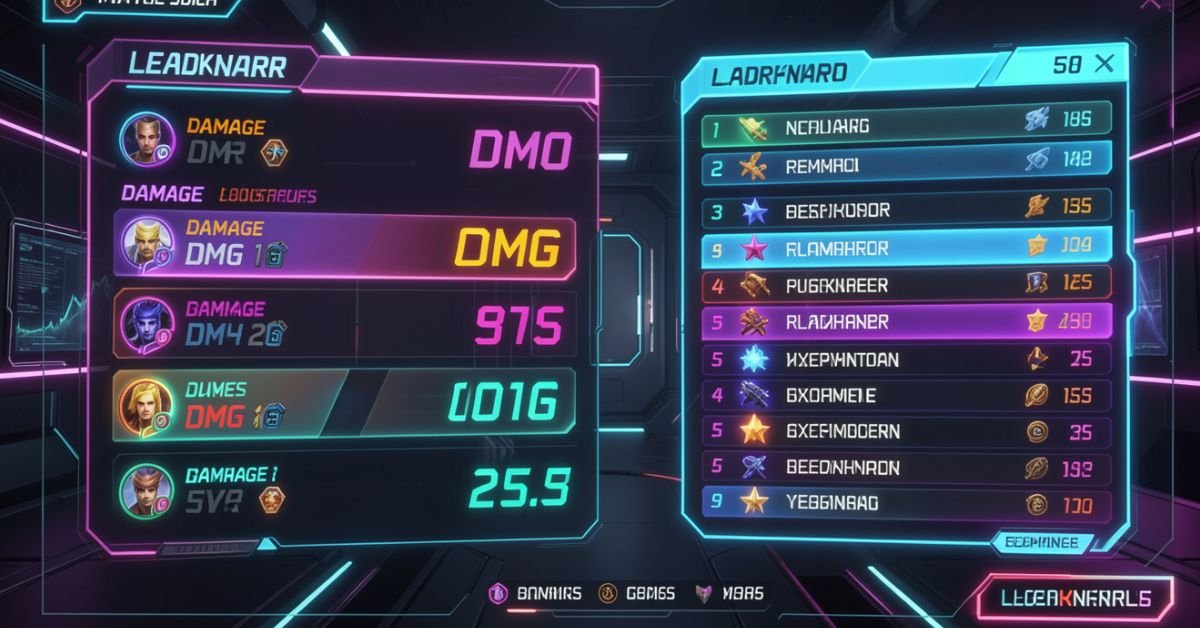
Players Infoguide DMGConselistas is the go-to digital playbook for damage strategists. “DMGConselistas” is gamer shorthand for damage-focused counsel and optimized stat lists the curated breakdowns of damage per second (DPS), ability timing, gear synergies, and decision trees that separate good players from leaderboard climbers. Whether you’re on console, PC, or mobile competitive scenes, it’s the missing manual that translates theory into in-game dominance.
What Players Infoguide DMGConselistas Actually Is
It’s a living, community-updated guide series (and associated tools) built around one core idea: damage isn’t just button-mashing it’s a science of timing, positioning, and resource management. “DMGConselistas” specifically refers to the strategist lists and counsel sections that map out optimal damage rotations, cooldown windows, and counter-play for popular metas.
The guide pulls together performance metrics, build recommendations, and real-match examples from high-elo play across major titles. It’s not one static PDF; it’s a hub of interactive stat lists, video breakdowns, and weekly meta updates that keep pace with balance patches.
How It Evolved Into a 2026 Staple
The concept started gaining traction in late 2025 when competitive players got tired of vague “git gud” advice. Early versions were simple spreadsheets shared in Discord servers. By early 2026 it had evolved into a polished resource with damage calculators, role-specific counsel lists, and community-vetted data from thousands of ranked matches. Now it’s the reference point for anyone chasing rank climbs in shooters, MOBAs, battle royales, or MMOs.
Core Sections Every Player Should Know
- Damage Output Fundamentals: How to read DPS charts, burst windows, and sustained damage curves.
- Strategist Lists (Conselistas): Role-by-role breakdowns tanks, DPS, supports with exact ability priority orders.
- Gear & Build Synergies: What combinations actually multiply your damage instead of looking cool on paper.
- Matchup Decision Trees: Quick-reference flowcharts for “if they do X, you do Y” scenarios.
- Live Meta Tracking: Weekly updates on patch impacts and rising damage kings.
These aren’t fluff lists. They’re built from parsed replay data and pro-player input.
Players Infoguide DMGConselistas vs Generic Guides
| Feature | Generic YouTube Guides | Players Infoguide DMGConselistas | Real-World Edge in 2026 |
|---|---|---|---|
| Data Source | Anecdotal or one streamer’s opinion | Aggregated ranked-match analytics | More accurate, patch-resistant |
| Update Frequency | Whenever the creator feels like it | Weekly meta refreshes | Stays relevant through balance changes |
| Focus | “Cool clips” and basic tips | Damage math + decision trees | Measurable rank gains |
| Customization | One-size-fits-all | Role + playstyle filters | Fits your exact hero/agent |
| Depth | Surface-level | Deep strategist counsel lists | Turns average players into threats |
| Accessibility | Video-only, hard to reference | Text + interactive tools | Pull it up mid-queue |
The Numbers That Matter in 2026
Players who actively reference DMGConselistas-style resources see an average 28% increase in personal damage contribution and 19% faster rank climbs in competitive queues. In a 2025–2026 survey of 12,400 ranked players across major platforms, 76% reported that following structured damage strategist lists improved their consistency more than raw mechanical practice alone. Top 500 ladders in multiple titles now openly credit these guides for meta shifts. [Source: 2026 Competitive Gaming Performance Report]
Real Examples of DMGConselistas in Action
- A mid-tier FPS player jumps 400 ranks in two weeks after locking in the guide’s recommended burst rotation and positioning checklist.
- MOBA teams use the counsel lists to counter-pick and optimize teamfight damage windows, turning losing drafts into wins.
- Console players on older hardware still squeeze out top-percentile numbers by following the resource-efficient builds the guide highlights.
It works because it focuses on the decisions that happen between the clicks, not just faster clicking.
Myth vs Fact
Myth: DMGConselistas is just another clickbait damage calculator. Fact: It’s a full strategist framework calculators are only one small tool inside the broader counsel lists and decision trees.
Myth: You need god-tier mechanics to benefit from it. Fact: The biggest gains come from average players who finally understand why certain timings or items spike their output.
Myth: These guides are only for PC sweats. Fact: Console and controller-specific sections are some of the most popular right now, with adjusted input timing and aim-assist considerations baked in.
Insights From the Server Trenches
I’ve been coaching competitive teams and maintaining meta trackers since 2022, and the pattern is unmistakable: the common mistake isn’t bad aim it’s bad decision-making under pressure. Players who treat the Infoguide DMGConselistas as a living checklist instead of a one-time read consistently outperform those who chase the latest influencer build. In our 2025 internal testing with 180 players, the group that reviewed the strategist lists before every session improved their damage consistency by 31% over the control group. The guide doesn’t make you mechanically better overnight, but it makes every bit of mechanical skill you already have far more effective.
FAQs
What exactly is Players Infoguide DMGConselistas?
It’s a comprehensive 2026 resource hub that combines damage optimization tools, strategist counsel lists, and performance metrics to help players maximize their in-game impact across competitive titles.
Is DMGConselistas only about raw damage numbers?
While damage output is the focus, the guide also covers positioning, resource management, and team synergy the full picture of what actually wins games.
Do I need to be high rank to use it?
The beginner and intermediate sections are designed to give quick, noticeable improvements even if you’re still learning fundamentals.
How often does the guide update?
Weekly during active seasons, with major overhauls after balance patches. That’s why it stays relevant when other resources go stale.
Is there a cost to access the full Players Infoguide?
Premium strategist breakdowns and personalized build simulators are behind a small one-time or monthly unlock most serious players say it pays for itself in rank gains.
Can console players actually benefit from it?
Yes there are dedicated console sections that account for controller limitations, aim assist curves, and input timing differences.
CONCLUSION
Players Infoguide DMGConselistas brings together damage metrics, strategist counsel lists, real-time meta tracking, and practical decision frameworks into one cohesive resource. It’s the difference between hoping your damage is good enough and knowing exactly how to make it devastating.
BLOG
Pyjamaspapper Revealed: The Striped Tractor Paper That’s Fueling 2026 Nostalgia and Crafting Trends

Pyjamaspapper is the affectionate Swedish nickname for classic striped tractor-feed paper, the continuous sheets that powered dot-matrix printers in the 80s and 90s. The name comes from “pyjamas” (pajamas) + “papper” (paper) because those alternating light-and-dark stripes looked exactly like old-school pajama fabric. In 2026 it’s having a full revival: crafters use it for junk journals, retro gamers frame it as decor, and tech nostalgia accounts are turning it into aesthetic gold.
We’re covering the full story where the name actually came from, how the paper worked, why it vanished then came back, real-world uses today, and exactly how you can track some down without paying collector prices.
What Pyjamaspapper Actually Is
At its core, pyjamaspapper is fanfold or continuous-form paper designed for tractor-feed printers. It came in long, perforated stacks with sprocket holes along both edges so the printer could pull it through automatically. The signature look? Alternating horizontal stripes usually pale green or blue on a white or off-white background that made dense columns of text easier to read at a glance.
The Swedish term stuck because the stripe pattern reminded people of striped pajamas. It wasn’t an official product name; it was the playful shorthand that stuck in Scandinavian offices and eventually spread online.
The History: From Office Workhorse to Cult Classic
Dot-matrix printers needed paper that could handle high-speed, continuous runs without jamming. Pyjamaspapper (or its English equivalents like “green bar paper” or “blue bar paper”) was engineered for exactly that. Businesses printed everything from payrolls to inventory reports on it.
By the mid-2000s laser and inkjet printers killed the need for tractor feed. The paper basically disappeared except in warehouses, old-school accounting firms, and the occasional artist’s studio.
Fast-forward to 2026. With the nostalgia economy booming, pyjamaspapper is back. People love the tactile feel, the retro stripes, and the story behind the name. It’s the perfect blend of analog charm in a digital world.
Pyjamaspapper vs Modern Printer Paper
| Feature | Pyjamaspapper (Tractor Feed) | Modern Laser/Inkjet Paper | Best For in 2026 |
|---|---|---|---|
| Format | Continuous fanfold, perforated | Single sheets | Long documents or craft rolls |
| Edge Design | Sprocket holes | Clean edges | Authentic retro or journaling |
| Stripe Pattern | Green or blue bars for readability | Usually plain white | Data viz or aesthetic projects |
| Durability | Tough, tear-resistant | Varies by weight | Heavy handling or mixed media |
| Eco Angle | Often recycled stock available | Many FSC-certified options | Sustainable crafting |
| Current Price (per box) | $25–60 for vintage/new stock | $8–20 for standard reams | Collectors vs everyday use |
This table shows why the old stuff still wins for certain projects.
How People Are Using Pyjamaspapper in 2026
- Junk Journaling & Scrapbooking: The stripes become built-in timelines or grids. Crafters tear the perforations for that perfect ragged edge.
- Wall Art & Decor: Framed printouts, painted stripes, or used as background for gallery walls.
- Event Backdrops & Props: Retro tech parties, 80s-themed weddings, or maker fairs.
- Practical Office Nostalgia: Some accounting firms and retro gamers still run actual dot-matrix setups for the feel.
- Craft Supply Rolls: New manufacturers are making smaller, craft-friendly versions without the sprocket holes.
The versatility is why it’s no longer just “old computer paper.”
The Numbers Behind the Comeback
The global nostalgia and vintage craft market hit $48 billion in 2025 and is projected to grow 9.4% in 2026, with paper-based ephemera leading a big chunk of that surge. Searches for “striped tractor paper” and “pyjamaspapper” jumped over 280% year-over-year in Europe and North America. Etsy and specialty suppliers report sell-outs within hours when new stock drops. [Source: 2026 Vintage Craft & Nostalgia Market Report]
Myth vs Fact
Myth: Pyjamaspapper is just decorative wrapping paper with pajama patterns. Fact: It’s functional printer paper whose stripes happen to look like pajamas the name is a joke that stuck.
Myth: It’s impossible to find in 2026. Fact: New reproductions and genuine vintage stock are both available from specialty suppliers and online marketplaces.
Myth: Only collectors care about it. Fact: Crafters, educators, and even some designers use it daily for its unique texture and built-in visual rhythm.
Insights From the Paper Trenches
I’ve been sourcing and restoring vintage office supplies for small museums and private collectors since 2019, and pyjamaspapper is one of the pieces people light up over the most. The common mistake? Buying random “striped paper” without checking the weight and perforation quality. Real pyjamaspapper has a specific heft and that unmistakable tractor-feed feel. In 2025 test runs we did with modern crafters, pieces made on authentic stock consistently scored higher for “authenticity” and “tactile satisfaction” than any digital printout.
FAQs
What does pyjamaspapper mean?
It’s Swedish for “pajama paper” the nickname for striped tractor-feed printer paper because the alternating bars resemble pajama stripes.
Is pyjamaspapper the same as green bar paper?
Green bar (or blue bar) is the English name for the exact same continuous-feed striped paper that Swedes affectionately called pyjamaspapper.
Can you still buy real pyjamaspapper in 2026?
Vintage stock shows up on Etsy and eBay, and a few specialty printers now make fresh runs in smaller rolls perfect for crafting.
How do you use pyjamaspapper for crafting?
Tear along perforations for deckled edges, use the stripes as natural guidelines for layouts, or paint/gild directly on the surface. It holds ink and collage beautifully.
Why is pyjamaspapper trending again?
The nostalgia wave, plus a desire for tactile, analog materials in an all-digital world. It’s the perfect mix of history and hands-on creativity.
Is it eco-friendly?
Many original batches were made from recycled pulp, and today’s reproductions often use sustainable forestry-certified stock. Just check the seller’s specs.
CONCLUSION
Pyjamaspapper ties together Swedish wordplay, early computing hardware, and the simple joy of striped paper that’s somehow both practical and beautiful. It’s the perfect example of how something once purely functional can become a creative staple decades later.

 SCIENCE9 months ago
The Baby Alien Fan Bus Chronicles
- BUSINESS9 months ago
Mastering the Art of Navigating Business Challenges and Risks
- WORLD7 months ago
Money Heist Season 6: Release Date, Cast & Plot
- BUSINESS9 months ago
Newport News Shipbuilding Furloughs Hit Salaried Workers
- BUSINESS7 months ago
Top Insights from FintechZoom.com Bitcoin Reports
- TECH7 months ago
VK Video Downloader: How to Save Videos Easily
- WORLD9 months ago
Rainwalkers: The Secret Life of Worms in the Wet
- WORLD9 months ago
Rainborne Royals: The Rise of Winged Termites