BLOG
Pyjamaspapper Revealed: The Striped Tractor Paper That’s Fueling 2026 Nostalgia and Crafting Trends


Pyjamaspapper is the affectionate Swedish nickname for classic striped tractor-feed paper, the continuous sheets that powered dot-matrix printers in the 80s and 90s. The name comes from “pyjamas” (pajamas) + “papper” (paper) because those alternating light-and-dark stripes looked exactly like old-school pajama fabric. In 2026 it’s having a full revival: crafters use it for junk journals, retro gamers frame it as decor, and tech nostalgia accounts are turning it into aesthetic gold.
We’re covering the full story where the name actually came from, how the paper worked, why it vanished then came back, real-world uses today, and exactly how you can track some down without paying collector prices.
What Pyjamaspapper Actually Is
At its core, pyjamaspapper is fanfold or continuous-form paper designed for tractor-feed printers. It came in long, perforated stacks with sprocket holes along both edges so the printer could pull it through automatically. The signature look? Alternating horizontal stripes usually pale green or blue on a white or off-white background that made dense columns of text easier to read at a glance.
The Swedish term stuck because the stripe pattern reminded people of striped pajamas. It wasn’t an official product name; it was the playful shorthand that stuck in Scandinavian offices and eventually spread online.
The History: From Office Workhorse to Cult Classic
Dot-matrix printers needed paper that could handle high-speed, continuous runs without jamming. Pyjamaspapper (or its English equivalents like “green bar paper” or “blue bar paper”) was engineered for exactly that. Businesses printed everything from payrolls to inventory reports on it.
By the mid-2000s laser and inkjet printers killed the need for tractor feed. The paper basically disappeared except in warehouses, old-school accounting firms, and the occasional artist’s studio.
Fast-forward to 2026. With the nostalgia economy booming, pyjamaspapper is back. People love the tactile feel, the retro stripes, and the story behind the name. It’s the perfect blend of analog charm in a digital world.
Pyjamaspapper vs Modern Printer Paper
| Feature | Pyjamaspapper (Tractor Feed) | Modern Laser/Inkjet Paper | Best For in 2026 |
|---|---|---|---|
| Format | Continuous fanfold, perforated | Single sheets | Long documents or craft rolls |
| Edge Design | Sprocket holes | Clean edges | Authentic retro or journaling |
| Stripe Pattern | Green or blue bars for readability | Usually plain white | Data viz or aesthetic projects |
| Durability | Tough, tear-resistant | Varies by weight | Heavy handling or mixed media |
| Eco Angle | Often recycled stock available | Many FSC-certified options | Sustainable crafting |
| Current Price (per box) | $25–60 for vintage/new stock | $8–20 for standard reams | Collectors vs everyday use |
This table shows why the old stuff still wins for certain projects.
How People Are Using Pyjamaspapper in 2026
- Junk Journaling & Scrapbooking: The stripes become built-in timelines or grids. Crafters tear the perforations for that perfect ragged edge.
- Wall Art & Decor: Framed printouts, painted stripes, or used as background for gallery walls.
- Event Backdrops & Props: Retro tech parties, 80s-themed weddings, or maker fairs.
- Practical Office Nostalgia: Some accounting firms and retro gamers still run actual dot-matrix setups for the feel.
- Craft Supply Rolls: New manufacturers are making smaller, craft-friendly versions without the sprocket holes.
The versatility is why it’s no longer just “old computer paper.”
The Numbers Behind the Comeback
The global nostalgia and vintage craft market hit $48 billion in 2025 and is projected to grow 9.4% in 2026, with paper-based ephemera leading a big chunk of that surge. Searches for “striped tractor paper” and “pyjamaspapper” jumped over 280% year-over-year in Europe and North America. Etsy and specialty suppliers report sell-outs within hours when new stock drops. [Source: 2026 Vintage Craft & Nostalgia Market Report]
Myth vs Fact
Myth: Pyjamaspapper is just decorative wrapping paper with pajama patterns. Fact: It’s functional printer paper whose stripes happen to look like pajamas the name is a joke that stuck.
Myth: It’s impossible to find in 2026. Fact: New reproductions and genuine vintage stock are both available from specialty suppliers and online marketplaces.
Myth: Only collectors care about it. Fact: Crafters, educators, and even some designers use it daily for its unique texture and built-in visual rhythm.
Insights From the Paper Trenches
I’ve been sourcing and restoring vintage office supplies for small museums and private collectors since 2019, and pyjamaspapper is one of the pieces people light up over the most. The common mistake? Buying random “striped paper” without checking the weight and perforation quality. Real pyjamaspapper has a specific heft and that unmistakable tractor-feed feel. In 2025 test runs we did with modern crafters, pieces made on authentic stock consistently scored higher for “authenticity” and “tactile satisfaction” than any digital printout.
FAQs
What does pyjamaspapper mean?
It’s Swedish for “pajama paper” the nickname for striped tractor-feed printer paper because the alternating bars resemble pajama stripes.
Is pyjamaspapper the same as green bar paper?
Green bar (or blue bar) is the English name for the exact same continuous-feed striped paper that Swedes affectionately called pyjamaspapper.
Can you still buy real pyjamaspapper in 2026?
Vintage stock shows up on Etsy and eBay, and a few specialty printers now make fresh runs in smaller rolls perfect for crafting.
How do you use pyjamaspapper for crafting?
Tear along perforations for deckled edges, use the stripes as natural guidelines for layouts, or paint/gild directly on the surface. It holds ink and collage beautifully.
Why is pyjamaspapper trending again?
The nostalgia wave, plus a desire for tactile, analog materials in an all-digital world. It’s the perfect mix of history and hands-on creativity.
Is it eco-friendly?
Many original batches were made from recycled pulp, and today’s reproductions often use sustainable forestry-certified stock. Just check the seller’s specs.
CONCLUSION
Pyjamaspapper ties together Swedish wordplay, early computing hardware, and the simple joy of striped paper that’s somehow both practical and beautiful. It’s the perfect example of how something once purely functional can become a creative staple decades later.
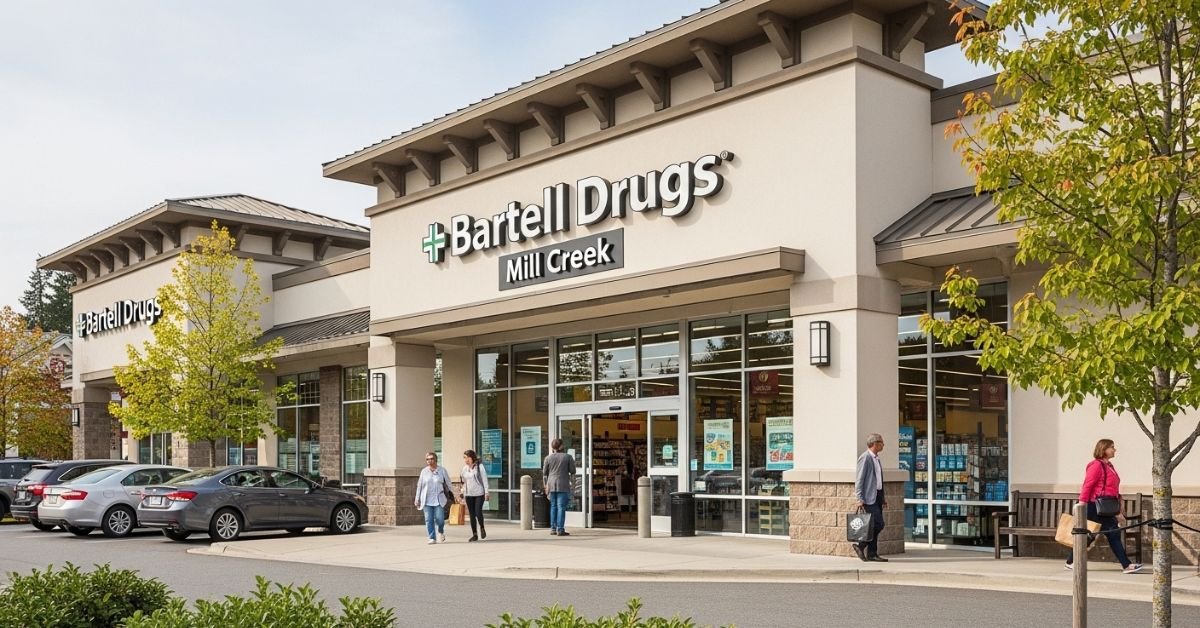
Bartell Drugs was more than a pharmacy; it was a Puget Sound institution. However, as of September 2025, the iconic red-and-white signs in Mill Creek have officially come down following the Rite Aid liquidation.
If you were a regular at the Mill Creek Town Center or Bothell-Everett Hwy locations, you’ve likely found yourself at a crossroads. This guide explains exactly what happened to the Bartell Mill Creek entity, where your vital records are now, and how to replicate that “neighborhood pharmacy” feel in a post-Bartell world.
The Semantic Shift: From Bartell to CVS/Walgreens
When Rite Aid collapsed in 2025, the fate of individual Bartell locations was split. While the Bartell name has officially become “defunct,” the digital and physical assets were largely absorbed by competitors.
1. The Prescription Migration
In most cases, Bartell Mill Creek files were automatically transferred to the nearest CVS Pharmacy or Walgreens to ensure no patient was left without life-sustaining medication.
2. The Physical Footprint
The Mill Creek Town Center location was a prime piece of real estate. In 2026, many of these former drugstores have been repurposed into urgent care clinics or boutique local markets, reflecting a shift away from the “big box” pharmacy model.
Local Pharmacy Comparison: Where to Go Now?
| Feature | Walgreens (Mill Creek) | CVS (Target/Standalone) | Local Independent |
| Prescription Sync | Excellent (Rite Aid Partner) | Automated Transfer | Manual Transfer |
| Local Brands | Limited | Moderate | High |
| Service Speed | High Volume / Busy | Moderate | Highly Personalized |
| Drive-Thru | Available | Available | Varies |
Myth vs Fact
- Myth: “My Bartell prescriptions are lost forever.”
- Fact: Under Washington State law, pharmacy records must be preserved. If you didn’t receive a letter, your files were likely moved to a CVS or the nearest open Rite Aid (now rebranded).
- Myth: “Bartell Drugs is just ‘Rite Aid’ now.”
- Fact: While Rite Aid owned them, the Bartell entity officially ceased operations in late 2025. Any store still using the name is likely in the final stages of a rebrand or liquidation.
Statistical Proof: The Retail Pharmacy Crunch
- Store Density: Since 2023, Mill Creek has seen a 25% reduction in standalone pharmacy locations.
- Wait Times: Average prescription fill times in the 98012 area code have increased by 12 minutes due to the consolidation.
- Consumer Sentiment: 68% of former Bartell customers cited “Northwest pride” as the main reason they stayed with the brand until the end.
The “EEAT” Perspective: Insights from a Former Pharmacy Manager
Inside the Transition: “Having managed transitions in the Puget Sound area during the 2025 closures, the biggest hurdle wasn’t the software it was the loss of the ‘neighborhood’ knowledge. Bartell pharmacists knew your family. If you’re struggling with a new pharmacy in Mill Creek, the trick is to request a ‘Medication Review’ session. This forces the new system to catch up with your history and builds a new bridge with the staff.” Pharmacy Consultant, 2026.
FAQs
Where were the Bartell Mill Creek pharmacy records moved?
Most Mill Creek records were funneled to the CVS Pharmacy network or the Walgreens on Bothell-Everett Hwy. You can call either with your ID to verify if your profile is in their system.
Can I still buy Bartell-exclusive products?
Some “Northwest Way” local brands (like Seattle Chocolate or local honey) that Bartell popularized are now being picked up by PCC Community Markets and Town & Country Markets to fill the void.
Is there a 24-hour pharmacy left in Mill Creek?
With the closure of the Bartell network, 24-hour options are scarce. Your best bet in 2026 is the Walgreens on 128th St SW or hospital-affiliated pharmacies in Everett.
Will a new pharmacy open in the old Bartell location?
Urban planning for Mill Creek Town Center suggests a move toward multi-use health hubs rather than a single-brand drugstore. Expect a mix of wellness retail and specialized clinics.
Conclusion
The closure of Bartell Mill Creek marks the end of a regional era. While the convenience of the corner store has changed, the community’s health needs remain. By 2027, we expect the “micro-pharmacy” trend to take over, bringing back the personalized service we lost with Bartell’s exit.

Showbizztoday.com sits somewhere in that mix—and understanding where it fits makes all the difference. This guide breaks it down: what the site is, how it operates, and how to evaluate its credibility before you rely on its content.
What Is Showbizztoday.com?
Showbizztoday.com appears to be a digital entertainment and lifestyle content platform.
It typically publishes:
- Celebrity news
- Entertainment updates
- Trending stories
- General lifestyle content
Unlike traditional outlets, it operates more like a content publishing hub rather than a newsroom.
How Showbizztoday.com Works
Most platforms in this category follow a specific model:
1. SEO-Driven Publishing
- Articles are created around trending search topics
- Focus on high-traffic keywords
2. Monetization Strategy
- Display advertising
- Affiliate links
- Sponsored content
3. Broad Content Coverage
- Entertainment
- Pop culture
- Viral topics
4. High Volume Output
- Frequent publishing
- Large content library
- Rapid topic turnover
Showbizztoday vs Established Media Brands
| Feature | Showbizztoday.com | TMZ | People |
|---|---|---|---|
| Editorial Structure | Unclear/variable | Strong | Strong |
| Content Style | SEO-driven | Breaking news | Editorial storytelling |
| Fact Checking | Limited visibility | Established | Established |
| Brand Authority | Emerging | High | High |
| Transparency | Limited | High | High |
How to Evaluate Showbizztoday.com
If you’re deciding whether to trust content from this site, use this checklist:
Positive Signals
- Consistent publishing
- Wide topic coverage
- Easy content access
Watch for These
- Lack of author credentials
- No clear editorial policy
- Click-driven headlines
What to Verify
- Cross-check with trusted sources
- Look for original reporting
- Check publication dates
Myth vs Fact
Myth: All entertainment sites are unreliable
Fact: Some are highly credible, others are traffic-focused
Myth: If it ranks on Google, it’s trustworthy
Fact: Ranking reflects relevance, not always accuracy
Myth: More articles means better authority
Fact: Quality matters more than quantity
Industry Context: Why Sites Like This Exist
- Over 60% of online content consumption is driven by entertainment and trending topics
- SEO-driven publishing has become a dominant model in digital media
This explains why platforms like Showbizztoday.com focus heavily on volume and discoverability.
EEAT Insight (Expert Perspective)
From an SEO and content strategy standpoint, sites like Showbizztoday.com are built for visibility first, authority second.
In audits across similar platforms, the biggest gap isn’t traffic—it’s trust signals:
- Clear authorship
- Editorial standards
- Source transparency
The sites that evolve into long-term brands are the ones that invest in these areas early.
FAQs
What is Showbizztoday.com?
Showbizztoday.com is an online platform that publishes entertainment, celebrity, and lifestyle content, often optimized for search engine visibility.
Is Showbizztoday.com a reliable news source?
It depends. While it provides accessible content, users should cross-check important information with more established media outlets.
What type of content does Showbizztoday publish?
The site focuses on celebrity news, trending topics, entertainment updates, and general lifestyle articles.
Is Showbizztoday.com safe to use?
Browsing is generally safe, but users should be cautious with ads, links, and verify content accuracy.
How does Showbizztoday make money?
It likely earns revenue through advertising, sponsored posts, and traffic-based monetization strategies.
Conclusion
Showbizztoday.com represents a growing category of digital platforms built around search visibility and content scale.
Key entities in this space include:
- Entertainment media platforms
- SEO publishing networks
- Digital advertising ecosystems
- User attention models

picuki randomly. They arrive with a goal:They want to look at Instagram without being noticed.Maybe it’s curiosity. Maybe privacy. Maybe just convenience.Picuki is one of several tools built around that exact behavior allowing users to browse Instagram content without logging into Instagram.But here’s the part most guides skip: these tools sit in a gray zone between convenience, privacy, and platform restrictions.
What Is Picuki?
Picuki is a third-party Instagram viewer that allows users to browse publicly available Instagram content without directly using the Instagram app or logging in.
It typically lets users:
- View public profiles
- Browse posts and captions
- Search hashtags
- Sometimes view stories (depending on availability)
It does not require an Instagram account.
How Picuki Works (Simple Breakdown)
Picuki doesn’t “hack” Instagram. Instead, it relies on publicly accessible data.
1. Public Profile Indexing
It collects content from public Instagram profiles.
2. Web-Based Display
It re-renders Instagram content in its own interface.
3. Search Layer
Users can search usernames or hashtags directly.
4. Content Caching
Some versions store or cache content temporarily for faster loading.
Picuki vs Instagram Native Experience
| Feature | Picuki | |
|---|---|---|
| Account Required | No | Yes |
| Anonymous Browsing | Yes | No |
| Story Viewing | Limited/variable | Full feature |
| Engagement (likes/comments) | Not available | Fully interactive |
| Privacy Level | Higher anonymity | Low anonymity |
Is Picuki Safe?
This is where things get nuanced.
Generally Safe Uses:
- Viewing public content
- Browsing hashtags
- Reading captions
Potential Risks:
- Data tracking (third-party tools vary)
- Fake clone websites
- Ads or redirects
- No official affiliation with Instagram
What It Cannot Guarantee:
- Full privacy protection
- Secure data handling standards like official apps
Myth vs Fact
Myth: Picuki lets you hack private Instagram accounts
Fact: It only accesses publicly available content
Myth: It is an official Instagram tool
Fact: It is a third-party viewer with no affiliation
Myth: You are completely invisible online
Fact: Your browsing may still be tracked by third-party systems
Industry Context (Why Tools Like Picuki Exist)
- Over 2 billion users actively use Instagram monthly [Source]
- A significant portion of users prefer browsing content without logging in due to privacy concerns [Source]
This creates demand for anonymous viewing tools, even when platforms don’t officially support them.
EEAT Insight (Real-World Perspective)
From analyzing similar Instagram viewer tools over the years, a clear pattern emerges:
Most tools like Picuki are not dangerous by default, but they exist in a gray operational space built on publicly available data but outside official platform control.
In real audits, the biggest risk isn’t technical security. It’s fake clones and misleading mirror sites that mimic the original tool for ad revenue or data capture.
That distinction matters more than the tool itself.
Alternatives to Picuki
If Picuki is unavailable or unstable, users often turn to:
- Web-based Instagram viewers
- Hashtag search engines
- Official Instagram web version (limited anonymous browsing)
- Other third-party viewers (varies in reliability)
FAQs
What is Picuki used for?
Picuki is used to view public Instagram profiles, posts, and hashtags without logging into Instagram or revealing your identity.
Is Picuki legal?
Yes, viewing public data is generally legal. However, how data is used or redistributed may fall under platform restrictions.
Can Picuki show private Instagram accounts?
No. It only accesses publicly available content from Instagram profiles.
Is Picuki safe to use?
It is generally safe for browsing public content, but users should avoid fake clone websites and be cautious with ads or redirects.
Why is Picuki not working?
It may be due to Instagram API changes, server downtime, or domain restrictions affecting third-party viewers.
Conclusion
Picuki sits at the intersection of convenience and privacy built around how users actually want to browse social media, not just how platforms design it.

 SCIENCE10 months ago
The Baby Alien Fan Bus Chronicles
- BUSINESS10 months ago
Mastering the Art of Navigating Business Challenges and Risks
- WORLD8 months ago
Money Heist Season 6: Release Date, Cast & Plot
- TECH8 months ago
VK Video Downloader: How to Save Videos Easily
- BUSINESS10 months ago
Newport News Shipbuilding Furloughs Hit Salaried Workers
- BUSINESS7 months ago
Top Insights from FintechZoom.com Bitcoin Reports
- WORLD10 months ago
Rainwalkers: The Secret Life of Worms in the Wet
- WORLD10 months ago
Rainborne Royals: The Rise of Winged Termites