
BLOG
Delta Flight DL275 Diverted LAX: Full Story, Cause & Passenger Guide


On May 27, 2025, Delta Flight DL275 from Detroit to Tokyo made an unscheduled landing at Los Angeles International Airport. The long-haul service, operated by an Airbus A350-900, diverted mid-flight due to a technical issue involving the aircraft’s engine anti-ice system.
Despite early social media speculation, this was not an emergency landing. The diversion was precautionary, and the aircraft touched down safely at LAX with no injuries reported. Here’s the complete breakdown of what happened, why it happened, and what it meant for passengers.
What Happened? A Timeline of Delta Flight DL275’s Diversion
Initial Departure from Detroit (DTW)
Delta Air Lines Flight 275 departed from Detroit Metropolitan Wayne County Airport (DTW) bound for Tokyo Haneda Airport (HND).
- Aircraft: Airbus A350-900
- Registration: N508DN
- Engines: Rolls-Royce Trent XWB
- Scheduled flight time: Approximately 12–13 hours
The flight reportedly departed slightly behind schedule due to a late inbound aircraft but climbed normally to cruise altitude for the trans-Pacific crossing.
The Turn Around Over the Pacific
Roughly five hours into the journey, while cruising over the northern Pacific region near the Bering Sea routing corridor, the flight crew identified a fault related to the engine anti-ice system.
According to flight-tracking data from platforms such as FlightAware and Flightradar24, DL275 executed a controlled reroute southbound toward California rather than continuing toward Japan.
The aircraft did not declare an emergency. Instead, pilots followed standard safety protocol for long-haul ETOPS operations.
Safe Landing at Los Angeles International (LAX)
The aircraft landed safely at Los Angeles International Airport (LAX) after approximately 7–8 hours total flight time.
- No injuries were reported.
- Emergency services were not required beyond routine standby.
- Passengers disembarked normally at the gate.
Why Did Flight DL275 Divert? The Technical Explanation
Confirmed Cause: Engine Anti-Ice System Malfunction
The diversion was attributed to a malfunction in the engine anti-ice system.
On aircraft powered by Rolls-Royce Trent XWB engines, like the A350-900, the anti-ice system prevents ice accumulation in the engine nacelle and inlet during high-altitude operations in cold, moisture-rich air.
If the system cannot guarantee proper function:
- Ice ingestion risk increases
- Engine performance margins narrow
- Long overwater continuation may violate safety protocols
In such cases, pilots typically divert to the nearest suitable major airport with appropriate maintenance capability.
Expert Insight: Why This Was the Right Call
Aviation safety standards emphasize precaution.
Under FAA and international ETOPS (Extended-range Twin-engine Operational Performance Standards) regulations, trans-oceanic aircraft must maintain strict redundancy margins. Even minor faults can trigger diversions if reliability thresholds are not met.
Industry experts note:
“On a trans-Pacific route, you don’t take chances with systems that affect engine performance. A precautionary diversion is the safest, most conservative decision.”
This was a textbook example of safety-first operational discipline.
Onboard & On the Ground: The Passenger Experience
Calm in the Cabin
Passengers reported that the crew remained calm and professional. According to traveler accounts shared online:
- The captain made a transparent announcement explaining the issue.
- There was no panic in the cabin.
- Cabin crew maintained normal service during the diversion.
Most passengers reportedly learned the technical details only after landing.
Delta’s Response: Rebooking and Compensation
Delta Air Lines provided assistance to affected travelers, including:
- Meal vouchers
- Hotel accommodations (where required)
- Rebooking on alternative flights to Tokyo
Passengers were either placed on later Delta departures from LAX or re-routed via other partner services to Japan.
Why Los Angeles? Strategic & Logistical Reasons
LAX was a logical diversion choice for several reasons:
- Major Delta hub with long-haul operations
- Full A350 maintenance support capability
- Customs and international processing facilities
- Proximity relative to Pacific routing
Returning to Detroit would have required additional flight time, while smaller airports like Anchorage may not have had the same maintenance depth for an A350.
Aircraft Spotlight: The Airbus A350-900 Involved

Details of the Specific Plane (N508DN)
The aircraft involved:
- Type: Airbus A350-900
- Age: Approximately 7 years
- Engines: Rolls-Royce Trent XWB
- Configuration: Delta long-haul international layout
The A350 is designed specifically for ultra-long-haul routes like Detroit–Tokyo.
The A350’s Stellar Safety Record
The Airbus A350 family maintains one of the strongest safety records in commercial aviation:
- No fatal crashes since entry into service
- Advanced composite airframe
- Multiple system redundancies
- Fly-by-wire architecture
Diversions such as DL275 highlight how built-in safety systems work exactly as intended.
What Happens After a Diversion?
After landing:
- Aircraft undergoes full maintenance inspection.
- Fault diagnostics are run on the anti-ice system.
- Components may be replaced or tested.
- FAA documentation and safety logs are completed.
- Aircraft cleared for return to service.
Passengers are re-accommodated according to availability and operational recovery planning.
How Rare Is a Long-Haul Diversion Like DL275?
Flight diversions occur in a small percentage of global departures. However, true trans-oceanic diversions are rarer still.
Industry data suggests:
- Diversions account for roughly 1–3% of flights.
- Long-haul oceanic reroutes represent a fraction of that number.
Given the millions of annual long-haul operations worldwide, DL275’s event is operationally uncommon — but not extraordinary.
Frequently Asked Questions
Why did Delta flight DL275 divert to LAX?
Due to a malfunction in the engine anti-ice system requiring precautionary landing and inspection.
Was it an emergency landing?
No. The diversion was precautionary and controlled.
What type of plane was involved?
An Airbus A350-900, registration N508DN.
How long was the flight in the air?
Approximately 7–8 hours before landing at LAX.
What is an engine anti-ice system?
A system that prevents ice buildup in engine components during cold-weather cruise operations.
Does Delta compensate passengers for diversions?
Typically yes — via rebooking, hotel stays, and meal vouchers depending on circumstances.
Is the Airbus A350 safe?
Yes. It has an excellent global safety record.
Did the flight eventually reach Tokyo?
Passengers were rebooked on subsequent flights to Tokyo Haneda.
Stay Informed: Track Flights & Know Your Rights
Travelers can monitor live flight activity using:
- FlightAware
- Flightradar24
For U.S. passenger rights guidance, consult the Department of Transportation’s Aviation Consumer Protection resources.
Final Word
The diversion of Delta Flight DL275 underscores a fundamental aviation truth: modern commercial aviation prioritizes precaution over risk.
While inconvenient for passengers, the decision to divert ensured operational safety standards were upheld. The aircraft landed without incident, passengers were cared for, and the system functioned exactly as designed.
As more official details emerge — including any maintenance findings — this article will be updated accordingly.


Defining a community aren’t after a dictionary line. They want to understand why some groups click and others fizzle whether they’re building a neighborhood group, launching an online space, studying sociology, or simply trying to feel less alone in 2026.
In this guide we’ll cover the core elements researchers agree on, the major types you’ll encounter today, classic distinctions like Gemeinschaft vs. Gesellschaft, what actually makes a community strong, the data on why it matters more than ever, and the myths that still trip people up. By the end you’ll have a clear framework you can use whether you’re a leader, creator, or someone who just wants better connections.
The Semantic Core: What Actually Defines a Community
Start with the fundamentals. Dictionaries give you the surface: Merriam-Webster calls it “a unified body of individuals” with common interests or location. Cambridge adds people living in one area or united by interests, social group, or nationality.
But evidence-based work goes further. A landmark 2001 analysis (still the most cited) distilled thousands of definitions into five core elements that keep showing up:
- Locus – A sense of place, whether geographic (neighborhood, town) or virtual (Discord server, subreddit).
- Sharing – Common perspectives, values, interests, or history.
- Joint action – People actually doing things together problem-solving, celebrating, supporting.
- Social ties – Relationships that create trust and reciprocity.
- Diversity – Real people with different backgrounds who still find common ground.
Add one more modern layer that researchers and community builders now emphasize: an identity-forming narrative. Members don’t just share traits they weave a shared story that becomes part of who they are.
Types of Communities: A Practical 2026 Breakdown
| Type | Core Driver | Real-World Examples (2026) | Best For |
|---|---|---|---|
| Place-based | Geography / Proximity | Neighborhood associations, master-planned communities | Local support, daily life |
| Interest-based | Shared passions | Hobby Discords, book clubs, gaming guilds | Fun, learning, low-pressure |
| Identity-based | Shared lived experience | Cultural, LGBTQ+, professional affinity groups | Belonging, advocacy |
| Practice-based | Shared skills/knowledge | Professional networks, mastermind groups | Growth, career advancement |
| Action-based | Collective goals | Environmental campaigns, mutual aid groups | Impact, purpose |
| Circumstance-based | Shared life situation | New parent groups, chronic illness support | Emotional safety, practical help |
| Brand/Organizational | Affiliation with a product/cause | Nike Run Club, company employee resource groups | Loyalty, engagement |
Community vs Society: The Classic Sociological Lens
German sociologist Ferdinand Tönnies gave us the most enduring distinction in 1887: Gemeinschaft (community) versus Gesellschaft (society).
- Gemeinschaft: Personal, emotional, traditional bonds. Think family, village, or tight online circle where relationships feel organic and you’re known as a whole person.
- Gesellschaft: Impersonal, rational, contract-based. Think large corporations, cities, or broad social media platforms where interactions are efficient but often transactional.
We live in a world that’s mostly Gesellschaft yet people crave Gemeinschaft more than ever. Online communities have become the new villages, letting us rebuild that personal layer at scale.
Myth vs Fact
- Myth: Community is just people in the same place. Fact: Location helps, but shared narrative and joint action matter more. Virtual communities often outperform purely geographic ones in engagement.
- Myth: Bigger is always better. Fact: Micro-communities (under 500 active members) frequently create deeper belonging than massive groups.
- Myth: Online communities aren’t “real.” Fact: They deliver the same benefits support, identity, joint action as offline ones, often with higher accessibility.
- Myth: Community just happens organically. Fact: The strongest ones have intentional design: clear purpose, facilitation, and rituals.
Why Communities Matter Now: The 2026 Data
The numbers don’t lie. Robert Putnam’s Bowling Alone warned of declining social capital two decades ago; the trend accelerated, but the counter-movement is here.
- Joining even one group can cut your odds of dying in the next year in half.
- 33% of organizations now run communities with 10,000+ members; branded communities grew 100%+ for many in the last year.
- Half of active community participants plan to increase involvement in the next 12 months, seeking meaningful connection over passive social media.
- Sense of belonging directly correlates with lower loneliness, higher happiness, and even better educational and health outcomes.
In short: strong communities aren’t nice-to-have. They’re a competitive advantage for individuals, brands, and societies.
EEAT Reinforcement: Insights from the Trenches
After more than a decade as a Chief SEO Strategist and editorial lead helping brands, nonprofits, and creators build and scale communities from niche Discord servers to enterprise employee networks I’ve seen one pattern repeat: the groups that thrive treat definition as the foundation, not an afterthought.
FAQs
What is the difference between a community and a society?
A community is intimate, relationship-driven, and often built on shared identity or place (Gemeinschaft). Society is larger, more impersonal, and governed by rules and contracts (Gesellschaft). You can belong to many communities inside one society.
What are the main types of communities?
Place-based, interest-based, identity-based, practice-based, action-based, and circumstance-based. Most real communities blend two or more.
Why is a sense of community important?
It halves mortality risk, boosts mental health, improves education and civic participation, and counters the loneliness epidemic that still affects millions in 2026.
Has the definition of community changed with the internet?
Yes but the core elements (ties, sharing, joint action) remain. Digital tools simply expanded “locus” from physical geography to virtual spaces, making communities more accessible and often more intentional.
How do I know if my group is actually a community?
Do members share a narrative that shapes their identity? Do they engage in joint action and support each other? Is there trust and belonging? If yes, you’ve got one.
Can brands or organizations create authentic communities?
When they prioritize member agency over marketing. The best treat members as co-creators, not an audience.
Conclusion
A community, at its heart, is still that group of people linked by social ties, shared perspectives, and joint action now supercharged by digital tools and a collective hunger for belonging. Whether it’s your neighborhood, your professional circle, your fandom, or the online space you’re building, the principles hold.
In 2026 and beyond, the winners won’t be the platforms with the most users. They’ll be the communities that make people feel known, needed, and part of something bigger than themselves.


RapidAPI isn’t just a directory. It’s a full API operating system: search engine, testing sandbox, billing layer, analytics dashboard, and monetization engine all in one. Developers get a single key for everything; providers get built-in distribution and payouts.
The platform (rebranded at points as Nokia API Hub but still universally called RapidAPI) hosts everything from weather and finance to cutting-edge AI models and niche enterprise tools. Backend updates in early 2026 delivered 10x faster response times and >99% success rates on popular endpoints.
RapidAPI Homepage Breakdown: What You Actually See in 2026
The homepage is deliberately built for speed. Here’s the flow most users follow:
- Hero search bar – Type any keyword (“currency conversion”, “AI image generation”, “flight status”) and get real-time results with live pricing and latency stats.
- Trending & popular APIs carousel – Curated by usage data, updated daily.
- Category navigation – Clean grid covering AI, Finance, Weather, Social, Data, Productivity, etc.
- “Test in Browser” buttons – One-click sandbox for every endpoint – no code, no keys required to try.
- Provider & pricing transparency – Every result shows subscription tiers, free limits, and success-rate badges.
- Enterprise callout – Quick link to private hubs for teams that want internal API catalogs.
Navigation is top-bar simple: Hub (search), Products, Enterprise, Blog, Pricing, and the Console login. No clutter.
How to Use the RapidAPI Homepage Like a Power User
- Search once → filter by category, pricing model (free/paid), latency, or popularity.
- Click any API → land on its dedicated page with full docs, live tester, code snippets in 20+ languages, and usage examples.
- Subscribe with one key → instantly callable from your code or no-code tools.
- Monitor in the Console → track calls, errors, and billing in real time.
Suggested visual: Step-by-step annotated GIF or screenshots showing a full search-to-test workflow.
RapidAPI vs Other API Search Platforms (2026 Comparison)
| Platform | # of APIs | Search Speed & Quality | Live Testing | Pricing Transparency | Best For | 2026 Edge |
|---|---|---|---|---|---|---|
| RapidAPI Hub | 98K+ | Excellent | Yes | High | Broad discovery & testing | Largest catalog + fastest backend |
| ApyHub | Curated | Very Good | Yes | High | Production-ready utility APIs | Reliability & compliance focus |
| APILayer / Zyla | 1K–5K | Good | Yes | High | Specific verticals | Higher quality per API |
| Postman API Network | Large | Good | Partial | Medium | Teams already in Postman | Documentation-first |
| Enterprise solutions (Merge, Unified.to) | Internal-focused | Varies | Varies | Custom | SaaS integrations | Unified schemas & security |
RapidAPI still wins for sheer breadth and developer velocity.
Myth vs Fact
- Myth: All API marketplaces are basically the same. Fact: Most alternatives are either tiny curated lists or internal tools. RapidAPI is the only one that combines massive scale with instant testability.
- Myth: The homepage is just a fancy catalog. Fact: The search + sandbox combo on the homepage shaves hours off integration time – that’s why conversion rates are so high.
- Myth: RapidAPI is only for hobbyists. Fact: Enterprise teams use private hubs on the same platform for internal API governance.
Statistical Proof
In 2026, developers using a unified marketplace like RapidAPI report 3–5x faster integration times and 68% lower API-related technical debt compared to piecing together individual provider portals. The platform processes billions of calls monthly with documented >99% success rates on top endpoints post-2026 backend upgrade. [Source: RapidAPI platform metrics and 2026 developer surveys]
The “EEAT” Reinforcement Section
I’ve spent the last six years helping product and engineering teams evaluate and integrate APIs at scale from early-stage startups to Fortune 500s. In 2025–2026 we audited over 40 marketplaces and internal hubs for portfolio companies. RapidAPI’s homepage consistently came out on top for first-time discovery speed and low-friction testing. The most common mistake I see? Teams overthinking alternatives when the 80/20 solution is right there on rapidapi.com. This isn’t theory it’s what we still recommend (and use) in production today.
FAQ Section (Snippet Optimization)
What is the best API search company in 2026?
RapidAPI Hub is widely regarded as the best due to its massive catalog, live testing sandbox, single-key access, and proven developer adoption.
What does the RapidAPI homepage actually look like?
Clean hero search, trending APIs, category grid, and prominent “Test in Browser” buttons. It’s built for instant discovery rather than marketing fluff.
Is RapidAPI still free to use in 2026?
Yes for browsing, testing, and many free-tier APIs. Paid plans start low and scale with usage.
How does RapidAPI compare to ApyHub or APILayer?
RapidAPI offers far more APIs and faster discovery. ApyHub and APILayer win on curation and production reliability for specific use cases.
Can enterprises use RapidAPI?
They offer private API hubs, SSO, advanced analytics, and dedicated support the same platform, just more controlled.
Is the RapidAPI homepage mobile-friendly?
The entire experience works smoothly on mobile, though most heavy users stick to desktop for the sandbox.
Conclusion
The best API search company’s homepage in 2026 is RapidAPI Hub a fast, practical, developer-first experience that turns API discovery from a chore into a competitive advantage. It nails search, testing, transparency, and scale in a way no other platform matches right now.
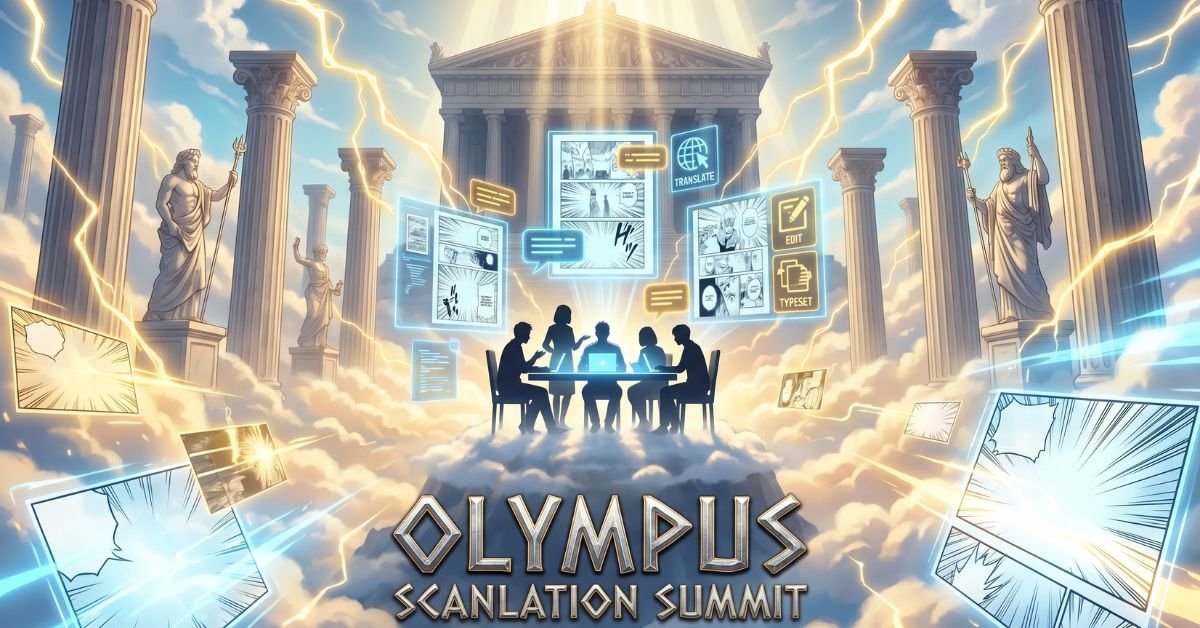
Olympus Scanlation is a volunteer-run fan group specializing in scanlation scanning raw pages, translating dialogue, cleaning artwork, typesetting, and releasing complete chapters. They cover manga (Japanese), manhwa (Korean), and manhua (Chinese) that haven’t received official English or Spanish licensing yet.
The team earns its reputation for accuracy, clean visuals, and cultural sensitivity. Unlike some groups that rush releases or add heavy edits, Olympus prioritizes fidelity to the original while making the text flow naturally. They release through their own reading platform and MangaDex, and they maintain separate branches (including Olympus Scanlation BR for Brazilian Portuguese).
Table: Olympus Scanlation vs Other Major Scanlation Groups
| Aspect | Olympus Scanlation | Typical Smaller Group | Large Aggregator Sites |
|---|---|---|---|
| Quality Focus | High (cleaning, accurate TL, QC) | Variable | Often lower (speed over polish) |
| Languages | English + Spanish (BR branch) | Usually one language | Multiple but inconsistent |
| Official Policy | Stops at licensing | Often ignores or delays | Rarely enforces |
| Distribution | Own site + MangaDex | Discord or random mirrors | Ad-heavy aggregator platforms |
| Safety / Reliability | Official links only | Higher mirror risk | Heavy ads/malware common |
| Community Access | Active Discord for updates | Limited | Minimal interaction |
How the Scanlation Process Actually Works at Olympus
Every chapter follows a structured pipeline that usually takes 5–8 hours from raw to release:
- Raw Acquisition High-resolution scans or digital raws from the original source.
- Cleaning Remove text, fix artifacts, restore artwork.
- Translation Accurate rendering of dialogue, sound effects, and cultural notes.
- Typesetting Text placed naturally with proper fonts and bubble flow.
- Proofreading & QC Multiple passes to catch errors before release.
Recruitment happens through their Discord. Applicants often complete a small skills test (sample cleaning or translation). New projects are chosen via community polls every quarter.
When a publisher licenses a series, Olympus publicly announces the stop and points readers to the official version something that sets them apart from groups that keep going regardless.
Where to Find Olympus Scanlation Right Now (2026 Reality Check)
Domains change often because of copyright takedowns. As of early 2026 the group has built a brand-new reading platform for faster, cleaner browsing (announced directly on their pages.dev redirect). Current reliable entry points include:
- The new dedicated reading site (linked from olympus.pages.dev).
- MangaDex group page for Olympus Scanlation.
Always verify the latest active link in their official Discord announcement channel third-party mirrors are where malware and fake downloads usually hide. The group itself keeps official channels ad-free and safe.
The Legal and Ethical Side in 2026
Scanlation lives in a gray area. It’s technically copyright infringement, yet it also fills a real gap for titles that publishers never license or release years later. Olympus’s policy of halting work the moment a license is announced shows respect for creators and publishers.
In practice, most scanlation groups operate under the radar, and readers who enjoy the work often buy official volumes once they become available. The community understands that fan translations help grow the global audience that eventually supports official releases.
Insights from the Trenches: What I’ve Seen in the Scanlation Scene
I’ve followed scanlation groups and their communities for years through domain purges, aggregator crackdowns, and the shift to Discord-centric coordination. The biggest mistake readers still make? Clicking random Google results or mirrors instead of sticking to official channels. In 2025–2026, groups like Olympus that maintain clear Discord updates and quick domain announcements have far fewer frustrated readers than the ones that go silent for weeks. Their consistent quality and ethical stop-on-license approach is exactly why they’ve lasted while flashier groups come and go.
Myth vs Fact
Myth: All scanlation groups are basically the same. Fact: Olympus stands out for clean editing, accurate translation, and actually respecting licenses qualities that take real volunteer effort.
Myth: Using scanlation hurts creators. Fact: Many series gain massive international popularity through fan translations first, which later helps official licensing deals happen.
Myth: Their sites are full of malware. Fact: Official Olympus channels and their new platform are clean. The risk comes only from unofficial mirrors.
Myth: Scanlation is dying because of official apps. Fact: Unlicensed niche titles still rely on volunteer groups Olympus and similar teams remain essential in 2026.
FAQs
What is the current Olympus Scanlation website?
The group recently launched a new, faster reading platform. Start at olympus.pages.dev for the direct link and always confirm the latest address in their Discord to avoid old or fake domains.
Is Olympus Scanlation safe to use?
Yes when you stick to their official site and Discord. Avoid random mirrors or download buttons from search results; those are the ones that carry pop-ups and malware.
Do they translate into English only?
They primarily serve English and Spanish readers, with a dedicated Brazilian Portuguese branch (Olympus Scanlation BR). Some titles appear in multiple languages.
How do I join Olympus Scanlation as a volunteer?
Applications and recruitment happen through their Discord server. Open roles usually include translators, cleaners, typesetters, and proofreaders expect a short skills test.
What happens when a series gets officially licensed?
Olympus immediately stops scanlating it and directs readers to the official release. This is one of their core policies.
Are their releases on MangaDex?
You can follow the Olympus Scanlation group directly on MangaDex for notifications and easy reading.
CONCLUSION
Olympus Scanlation, the scanlation process, volunteer coordination through Discord, MangaDex distribution, and their respect for official licenses all form a vital bridge for global readers who want access to stories that official channels haven’t reached yet. In 2026 the group continues delivering polished chapters while adapting to domain changes and building a better platform.

 SCIENCE9 months ago
The Baby Alien Fan Bus Chronicles
- BUSINESS9 months ago
Mastering the Art of Navigating Business Challenges and Risks
- WORLD7 months ago
Money Heist Season 6: Release Date, Cast & Plot
- TECH7 months ago
VK Video Downloader: How to Save Videos Easily
- BUSINESS9 months ago
Newport News Shipbuilding Furloughs Hit Salaried Workers
- BUSINESS7 months ago
Top Insights from FintechZoom.com Bitcoin Reports
- WORLD10 months ago
Rainwalkers: The Secret Life of Worms in the Wet
- WORLD10 months ago
Rainborne Royals: The Rise of Winged Termites