
BLOG
“Ehi, Vuoi Da Bere?” — Your Complete Guide to the Italian Phrase That Opens Hearts and Homes

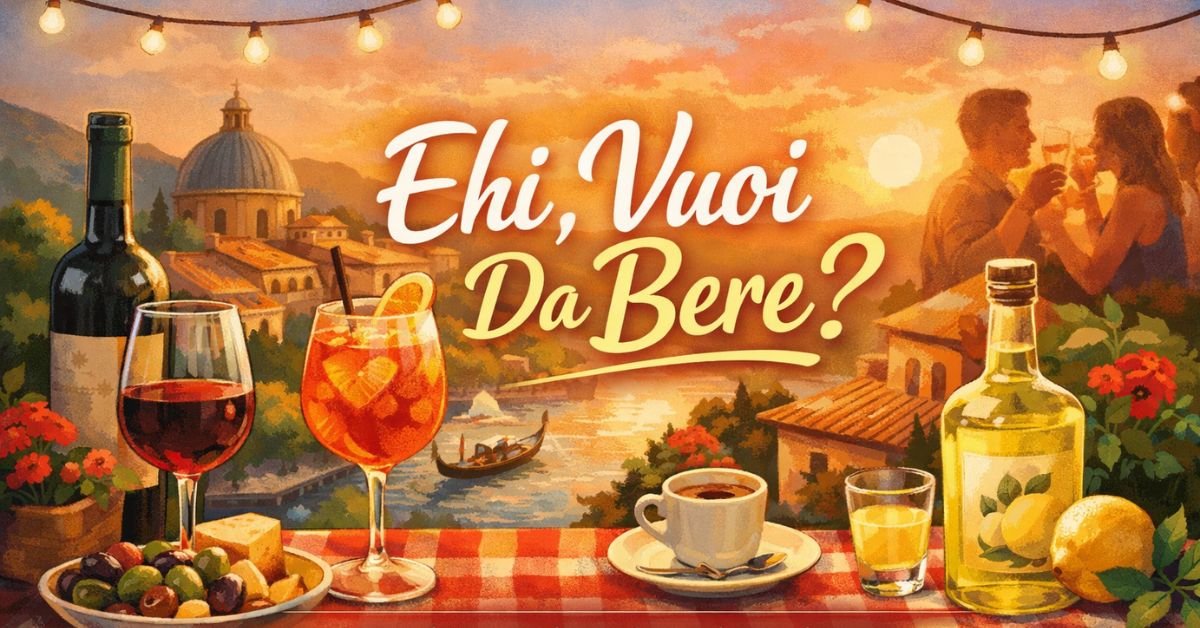
Few phrases in the Italian language carry as much social weight as “Ehi, vuoi da bere?” — literally, “Hey, would you like something to drink?” On the surface, it is a simple offer. In practice, it is an act of welcome, an opening of doors, and one of the most authentic expressions of Italian culture you will encounter.
Whether you are planning a trip to Italy, deepening your language skills, or simply curious about what the phrase means in its full cultural context, this guide covers everything: its translation, its traditions, the drinks you might be offered, the etiquette expected of you, and how it appears in Italian pop culture.
What Does “Ehi Vuoi Da Bere” Really Mean?
The Literal Translation vs. The Cultural Heartbeat
Word for word, “Ehi, vuoi da bere?” translates as: “Ehi” — hey; “vuoi” — do you want (from the verb volere, to want); “da bere” — something to drink (literally “to drink”).
The full English rendering is therefore: “Hey, do you want something to drink?” or more naturally, “Hey, would you like something to drink?” Simple enough. But the phrase operates on a second, deeper register — one that has less to do with beverages and everything to do with belonging.
More Than a Drink: It’s an Invitation to Connect
In Italy, offering a drink is rarely just about hydration. It is a social gesture, a signal that you are welcome in someone’s home or company, and that the person in front of you is worth a moment of their time. Hospitality — ospitalità — is embedded in Italian culture as a genuine value, not a formality.
When someone says “Ehi, vuoi da bere?”, they are inviting you into their social world. Accepting means joining the conversation, the company, the ritual. In this sense, the phrase functions almost like an extended hand — an offer of connection dressed as a question about drinks.
The Soul of Italy: Why This Phrase Is Culturally Significant
A Tradition Steeped in Warmth and Hospitality
Italian hospitality has deep roots, shaped by centuries of regional tradition, family life, and a culture that places enormous value on shared meals and communal experience. Unlike cultures where social interactions tend to be more reserved, Italians are generally warm and forthcoming with offers of food and drink — it is considered natural, even obligatory, to offer a guest something to consume.
The phrase “Ehi, vuoi da bere?” is part of this larger tradition. It signals that a guest is seen, acknowledged, and valued. Refusing without explanation can, in some contexts, feel slightly abrupt — though Italians are not unaware of different cultural norms and generally adapt gracefully.
The Social Ritual of Sharing a Moment
Beyond hospitality as a concept, the act of sharing a drink in Italy is a structured social ritual. There are specific drinks for specific moments of the day, specific ways to toast, and specific settings in which each type of drink belongs. Understanding this ritual gives the phrase “Ehi, vuoi da bere?” its full weight.
It is not just what you drink, but when, with whom, and how you drink it that matters. The phrase initiates this ritual and everything that follows — from the choice of drink to the conversation that unfolds around it — is part of a social choreography that Italians navigate with ease and pleasure.
A Journey Through Italian Glasses: What You Might Be Offered
If someone extends you the invitation of “Ehi, vuoi da bere?”, what you are offered depends heavily on the time of day, your setting, and the region of Italy you are in. Here is a comprehensive guide to the most likely candidates.
The Art of Aperitivo (Pre-Dinner Drinks)
The aperitivo is perhaps the most culturally iconic Italian drinking tradition. Held in the early evening — typically between 6:00 PM and 9:00 PM — it is a pre-dinner ritual combining light alcoholic drinks with small bites of food (the stuzzichini or cicchetti), designed to stimulate the appetite and ease the transition from the working day into the social evening.
In cities like Milan, Turin, and Venice, the aperitivo is an institution. If someone says “Ehi, vuoi da bere?” in an aperitivo bar or at a pre-dinner gathering, you are most likely being offered one of the following:
- Aperol Spritz — the ubiquitous orange-hued cocktail made with Aperol, prosecco, and a splash of soda. Refreshing, slightly bitter, and immediately recognizable.
- Negroni — a more sophisticated blend of gin, Campari, and sweet vermouth. Beloved in Florence, where it was reportedly invented.
- Campari Soda — a simpler, pre-mixed bittersweet aperitif, popular for its convenience and bold flavor.
- Prosecco — Italy’s celebrated sparkling wine from the Veneto region. Light, crisp, and extremely widely offered.
Italy’s Liquid Gold: A Guide to Regional Wines
Wine is inseparable from Italian identity. Italy produces more wine varieties than any other country in the world, and every region has its signature bottles. If you are offered a glass of wine after the question “Ehi, vuoi da bere?”, the choice will often reflect where you are.
| Region | Famous Wine | Character |
| Tuscany | Chianti, Brunello di Montalcino | Dry, full-bodied red; pairs with meat dishes |
| Veneto | Prosecco, Amarone | Sparkling and rich; from the foothills of the Dolomites |
| Piedmont | Barolo, Barbera d’Asti | Bold, tannic reds; known as “the wine of kings” |
| Sicily | Nero d’Avola, Marsala | Rich, sun-drenched reds and fortified wines |
| Campania | Falanghina, Greco di Tufo | Crisp, aromatic whites from volcanic soils |
| Friuli-Venezia Giulia | Pinot Grigio, Friulano | Elegant whites; among Italy’s finest |
The Daily Ritual: Italian Coffee Culture
Coffee in Italy is not merely a beverage — it is a philosophy. Italians drink coffee multiple times a day, but with strict, unspoken rules governing what is appropriate at which hour. If “Ehi, vuoi da bere?” is uttered mid-morning or after a meal, a coffee offer is entirely plausible.
- Espresso — the default. Short, intense, and drunk standing at the bar. The baseline of Italian coffee culture.
- Caffè Macchiato — espresso “stained” with a small amount of milk foam. A slightly softer option.
- Caffè Americano — espresso diluted with hot water. Widely available for international visitors.
Tip: The Unspoken Rule: Cappuccino is a morning drink. Ordering one after 11:00 AM — and especially after a meal — marks you immediately as a tourist. If you want to blend in, stick to espresso after lunch or dinner.
The Sweet and Bitter Finish: Digestifs and Liqueurs
After a meal, “Ehi, vuoi da bere?” might be an offer of a digestivo — a post-dinner liqueur intended to aid digestion. This is where the phrase takes on its most convivial and leisurely character: the meal is finished, the table is relaxed, and the evening is stretching pleasantly ahead.
- Limoncello — the bright yellow lemon liqueur from the Amalfi Coast and Sicily. Served ice cold, ideally from a bottle kept in the freezer.
- Amaro — a family of bitter herbal liqueurs with significant regional variety. Amaro Montenegro, Fernet-Branca, and Averna are among the most recognized.
- Grappa — a potent grape pomace spirit. Acquired taste; deeply traditional, especially in northern Italy.
- Sambuca — anise-flavored liqueur, often served with three coffee beans (“con la mosca”) floating on top.
Beyond Alcohol: Non-Alcoholic Offerings
Not every “Ehi, vuoi da bere?” leads to an alcoholic drink. Italy also has a strong tradition of distinctive non-alcoholic beverages, particularly in casual or family settings.
- San Pellegrino or Acqua Panna — sparkling or still mineral water, served at virtually every Italian table.
- Chinotto — a slightly bitter, dark soda made from the chinotto citrus fruit. Uniquely Italian and surprisingly complex.
- Limonata or Aranciata — San Pellegrino’s sparkling lemon or orange sodas. Light, natural, and widely loved.
When and How to Use “Ehi Vuoi Da Bere” (Like a Local)
Four Common Scenarios
The phrase appears naturally across a broad range of social situations. Here are the four most common contexts you are likely to encounter it:
Scenario 1: At Home (A Family Lunch)
You arrive at an Italian friend or colleague’s home. Before you’ve even sat down, someone from the family — often an older relative — will appear from the kitchen and ask, “Ehi, vuoi da bere?” The expected answer is something refreshing: mineral water, a light aperitif, or a local wine, depending on the time of day.
Scenario 2: At a Caffe or Bar
In Italian bars (which are more café than pub), the phrase may come from a host inviting a friend to join them. “Ehi, vuoi da bere?” in this setting is an invitation to stop, sit, and spend twenty minutes in good company over an espresso or a quick spritz.
Scenario 3: At Aperitivo Hour
If you’re meeting Italians in the early evening — in a piazza, at someone’s apartment, or at an aperitivo bar — the question will almost certainly be followed by an Aperol Spritz or Prosecco. This is peak social hour, and the phrase carries with it the full warmth of the tradition.
Scenario 4: After Dinner
The meal is over, the plates are cleared, but no one is in a hurry to leave. “Ehi, vuoi da bere?” now signals the digestivo round — a small glass of something herbal, sweet, or sharp to close the evening. Saying yes here means the evening continues.
Italian Drinks by Region: A Local’s Guide
One of the great pleasures of traveling in Italy is discovering that each region has its own drinking customs. The phrase “Ehi, vuoi da bere?” in Venice may result in a Bellini; in Naples, an espresso; in the Amalfi Coast, a Limoncello.
| Region | Signature Drink | Best Moment |
| Milan / Lombardy | Campari Soda, Negroni | Aperitivo hour |
| Venice / Veneto | Bellini (prosecco + peach), Spritz | Midday or early evening |
| Florence / Tuscany | Chianti, Negroni | With dinner or before |
| Naples / Campania | Espresso, Limoncello | Morning coffee or post-dinner |
| Sicily | Nero d’Avola, Granita di Limone | With meals or as a refreshment |
| Piedmont | Barolo, Vermouth di Torino | Aperitivo or with red meat |
Your Go-To Guide: Etiquette and How to Respond
The Perfect Reply: What to Say
When someone offers you a drink with “Ehi, vuoi da bere?”, the range of acceptable responses is broader than you might think. Italians are gracious hosts, but they appreciate genuine engagement over polite deflection.
- “Sì, grazie!” — Yes, thank you. The simplest and most welcome response. Always appreciated.
- “Cosa mi consigli?” — What do you recommend? This is an excellent phrase. It shows curiosity, deference to the host’s knowledge, and signals that you are genuinely interested in the local culture.
- “No grazie, sto bene” — No thank you, I’m fine. Perfectly acceptable, especially if you follow it with a warm smile and perhaps a reason (driving, preference, etc.).
- “Magari un’acqua” — Maybe just a water. A modest, entirely appropriate choice at any time of day.
5 Essential Dos and Don’ts of Italian Drinking Etiquette
- DO make eye contact when toasting. The Italian toast is “Cin cin!” or “Salute!” — and looking away during the clink is considered bad luck (and bad manners).
- DO wait until the host raises their glass before drinking. Starting before a toast is an informal breach of etiquette.
- DON’T order a cappuccino after 11:00 AM. Especially not after lunch or dinner. Espresso is the correct post-meal choice.
- DON’T refuse multiple times in quick succession. A single polite refusal is respected; repeated refusals can be read as a rejection of hospitality itself.
- DO try something local. If you’re in the Veneto and offered a Spritz, or in Sicily and offered a Limoncello — say yes. These are not just drinks; they are expressions of place and pride.
The Phrase in Pop Culture: From Vasco Rossi to Modern Italy
The phrase “Ehi, vuoi da bere?” has also found its way into Italian popular culture, most notably through the music of Vasco Rossi, one of Italy’s most beloved rock artists. Known for lyrics that capture the textures of everyday Italian life with directness and emotional honesty, Vasco Rossi’s use of the phrase reflects its vernacular authenticity — it is the kind of thing real people say in real moments, not a formal or literary construction.
This cultural embedding is significant. When a phrase appears in song lyrics, it confirms its status not merely as a linguistic unit but as a lived social gesture — something instantly recognizable to millions of Italian speakers across generations. Vasco Rossi’s audience would hear the phrase and understand immediately the setting it invokes: an informal gathering, a moment of connection, someone reaching out.
Beyond music, the phrase appears regularly in Italian film and television, typically in scenes designed to evoke warmth, normalcy, and social belonging. It is the verbal equivalent of a lit kitchen, a kitchen table, voices overlapping in easy conversation. It signals home.
Frequently Asked Questions About “Ehi Vuoi Da Bere”
What does “Ehi Vuoi Da Bere” mean in English?
It translates literally as “Hey, do you want something to drink?” In practice, it is a warm social offer rooted in Italian hospitality culture — an invitation to connect as much as to consume.
How do you pronounce “Ehi Vuoi Da Bere”?
Phonetically: “Ay vwoy dah BEH-reh.” The “Ehi” sounds like the English interjection “hey”; “vuoi” rhymes roughly with “boy”; “da bere” is two clear syllables each.
When do Italians typically say “Ehi Vuoi Da Bere”?
It can be used at almost any time of day, but is most common when welcoming someone into a home, during aperitivo hour (6–9 PM), after a meal as an invitation to stay longer, or at any informal social gathering.
Is it rude to refuse a drink in Italy?
A single polite refusal is always respected. However, refusing multiple times insistently may be read as a rejection of the host’s hospitality rather than a personal preference. A simple “No grazie, sto bene” with a warm tone is perfectly appropriate.
What is an Italian aperitivo?
Aperitivo is a pre-dinner social ritual held in the early evening, typically between 6:00 and 9:00 PM. It involves light alcoholic drinks (Aperol Spritz, Negroni, Prosecco) paired with small bites of food, and serves as a bridge between the working day and the dinner hour.
Can I order a cappuccino after dinner in Italy?
Technically yes — you can order whatever you like. But cappuccino after a meal is strongly associated with tourist behavior in Italy. Locals drink espresso after lunch and dinner. If fitting in matters to you, follow suit.
What is the difference between Limoncello and Amaro?
Limoncello is a sweet, lemon-based liqueur from Southern Italy, typically served very cold. Amaro is a broader category of bitter herbal liqueurs with significant regional variation — the word “amaro” literally means “bitter.” Both are digestifs, but Limoncello is sweet and bright, while Amaro tends to be complex and medicinal in character.
Is “Ehi Vuoi Da Bere” a common phrase among young Italians?
Yes, very much so. While the phrasing is vernacular rather than formal, it is used across all age groups. Among younger Italians, it is equally common during aperitivo outings, house gatherings, and social events. Its informality — the “Ehi” opener especially — makes it feel contemporary and natural.
Final Thoughts
“Ehi, vuoi da bere?” is, at its core, one of the most human things a person can say to another. It is an offer of time, presence, and welcome. Understanding it fully — the drinks it might precede, the etiquette it implies, the cultural weight it carries — is not just a linguistic exercise. It is a window into a way of living that Italy has refined over centuries. So the next time someone asks you “Ehi, vuoi da bere?” — say yes. Take the glass. Look them in the eye when you toast. The rest will follow naturally.


Bartell Drugs was more than a pharmacy; it was a Puget Sound institution. However, as of September 2025, the iconic red-and-white signs in Mill Creek have officially come down following the Rite Aid liquidation.
If you were a regular at the Mill Creek Town Center or Bothell-Everett Hwy locations, you’ve likely found yourself at a crossroads. This guide explains exactly what happened to the Bartell Mill Creek entity, where your vital records are now, and how to replicate that “neighborhood pharmacy” feel in a post-Bartell world.
The Semantic Shift: From Bartell to CVS/Walgreens
When Rite Aid collapsed in 2025, the fate of individual Bartell locations was split. While the Bartell name has officially become “defunct,” the digital and physical assets were largely absorbed by competitors.
1. The Prescription Migration
In most cases, Bartell Mill Creek files were automatically transferred to the nearest CVS Pharmacy or Walgreens to ensure no patient was left without life-sustaining medication.
2. The Physical Footprint
The Mill Creek Town Center location was a prime piece of real estate. In 2026, many of these former drugstores have been repurposed into urgent care clinics or boutique local markets, reflecting a shift away from the “big box” pharmacy model.
Local Pharmacy Comparison: Where to Go Now?
| Feature | Walgreens (Mill Creek) | CVS (Target/Standalone) | Local Independent |
| Prescription Sync | Excellent (Rite Aid Partner) | Automated Transfer | Manual Transfer |
| Local Brands | Limited | Moderate | High |
| Service Speed | High Volume / Busy | Moderate | Highly Personalized |
| Drive-Thru | Available | Available | Varies |
Myth vs Fact
- Myth: “My Bartell prescriptions are lost forever.”
- Fact: Under Washington State law, pharmacy records must be preserved. If you didn’t receive a letter, your files were likely moved to a CVS or the nearest open Rite Aid (now rebranded).
- Myth: “Bartell Drugs is just ‘Rite Aid’ now.”
- Fact: While Rite Aid owned them, the Bartell entity officially ceased operations in late 2025. Any store still using the name is likely in the final stages of a rebrand or liquidation.
Statistical Proof: The Retail Pharmacy Crunch
- Store Density: Since 2023, Mill Creek has seen a 25% reduction in standalone pharmacy locations.
- Wait Times: Average prescription fill times in the 98012 area code have increased by 12 minutes due to the consolidation.
- Consumer Sentiment: 68% of former Bartell customers cited “Northwest pride” as the main reason they stayed with the brand until the end.
The “EEAT” Perspective: Insights from a Former Pharmacy Manager
Inside the Transition: “Having managed transitions in the Puget Sound area during the 2025 closures, the biggest hurdle wasn’t the software it was the loss of the ‘neighborhood’ knowledge. Bartell pharmacists knew your family. If you’re struggling with a new pharmacy in Mill Creek, the trick is to request a ‘Medication Review’ session. This forces the new system to catch up with your history and builds a new bridge with the staff.” Pharmacy Consultant, 2026.
FAQs
Where were the Bartell Mill Creek pharmacy records moved?
Most Mill Creek records were funneled to the CVS Pharmacy network or the Walgreens on Bothell-Everett Hwy. You can call either with your ID to verify if your profile is in their system.
Can I still buy Bartell-exclusive products?
Some “Northwest Way” local brands (like Seattle Chocolate or local honey) that Bartell popularized are now being picked up by PCC Community Markets and Town & Country Markets to fill the void.
Is there a 24-hour pharmacy left in Mill Creek?
With the closure of the Bartell network, 24-hour options are scarce. Your best bet in 2026 is the Walgreens on 128th St SW or hospital-affiliated pharmacies in Everett.
Will a new pharmacy open in the old Bartell location?
Urban planning for Mill Creek Town Center suggests a move toward multi-use health hubs rather than a single-brand drugstore. Expect a mix of wellness retail and specialized clinics.
Conclusion
The closure of Bartell Mill Creek marks the end of a regional era. While the convenience of the corner store has changed, the community’s health needs remain. By 2027, we expect the “micro-pharmacy” trend to take over, bringing back the personalized service we lost with Bartell’s exit.

Showbizztoday.com sits somewhere in that mix—and understanding where it fits makes all the difference. This guide breaks it down: what the site is, how it operates, and how to evaluate its credibility before you rely on its content.
What Is Showbizztoday.com?
Showbizztoday.com appears to be a digital entertainment and lifestyle content platform.
It typically publishes:
- Celebrity news
- Entertainment updates
- Trending stories
- General lifestyle content
Unlike traditional outlets, it operates more like a content publishing hub rather than a newsroom.
How Showbizztoday.com Works
Most platforms in this category follow a specific model:
1. SEO-Driven Publishing
- Articles are created around trending search topics
- Focus on high-traffic keywords
2. Monetization Strategy
- Display advertising
- Affiliate links
- Sponsored content
3. Broad Content Coverage
- Entertainment
- Pop culture
- Viral topics
4. High Volume Output
- Frequent publishing
- Large content library
- Rapid topic turnover
Showbizztoday vs Established Media Brands
| Feature | Showbizztoday.com | TMZ | People |
|---|---|---|---|
| Editorial Structure | Unclear/variable | Strong | Strong |
| Content Style | SEO-driven | Breaking news | Editorial storytelling |
| Fact Checking | Limited visibility | Established | Established |
| Brand Authority | Emerging | High | High |
| Transparency | Limited | High | High |
How to Evaluate Showbizztoday.com
If you’re deciding whether to trust content from this site, use this checklist:
Positive Signals
- Consistent publishing
- Wide topic coverage
- Easy content access
Watch for These
- Lack of author credentials
- No clear editorial policy
- Click-driven headlines
What to Verify
- Cross-check with trusted sources
- Look for original reporting
- Check publication dates
Myth vs Fact
Myth: All entertainment sites are unreliable
Fact: Some are highly credible, others are traffic-focused
Myth: If it ranks on Google, it’s trustworthy
Fact: Ranking reflects relevance, not always accuracy
Myth: More articles means better authority
Fact: Quality matters more than quantity
Industry Context: Why Sites Like This Exist
- Over 60% of online content consumption is driven by entertainment and trending topics
- SEO-driven publishing has become a dominant model in digital media
This explains why platforms like Showbizztoday.com focus heavily on volume and discoverability.
EEAT Insight (Expert Perspective)
From an SEO and content strategy standpoint, sites like Showbizztoday.com are built for visibility first, authority second.
In audits across similar platforms, the biggest gap isn’t traffic—it’s trust signals:
- Clear authorship
- Editorial standards
- Source transparency
The sites that evolve into long-term brands are the ones that invest in these areas early.
FAQs
What is Showbizztoday.com?
Showbizztoday.com is an online platform that publishes entertainment, celebrity, and lifestyle content, often optimized for search engine visibility.
Is Showbizztoday.com a reliable news source?
It depends. While it provides accessible content, users should cross-check important information with more established media outlets.
What type of content does Showbizztoday publish?
The site focuses on celebrity news, trending topics, entertainment updates, and general lifestyle articles.
Is Showbizztoday.com safe to use?
Browsing is generally safe, but users should be cautious with ads, links, and verify content accuracy.
How does Showbizztoday make money?
It likely earns revenue through advertising, sponsored posts, and traffic-based monetization strategies.
Conclusion
Showbizztoday.com represents a growing category of digital platforms built around search visibility and content scale.
Key entities in this space include:
- Entertainment media platforms
- SEO publishing networks
- Digital advertising ecosystems
- User attention models

picuki randomly. They arrive with a goal:They want to look at Instagram without being noticed.Maybe it’s curiosity. Maybe privacy. Maybe just convenience.Picuki is one of several tools built around that exact behavior allowing users to browse Instagram content without logging into Instagram.But here’s the part most guides skip: these tools sit in a gray zone between convenience, privacy, and platform restrictions.
What Is Picuki?
Picuki is a third-party Instagram viewer that allows users to browse publicly available Instagram content without directly using the Instagram app or logging in.
It typically lets users:
- View public profiles
- Browse posts and captions
- Search hashtags
- Sometimes view stories (depending on availability)
It does not require an Instagram account.
How Picuki Works (Simple Breakdown)
Picuki doesn’t “hack” Instagram. Instead, it relies on publicly accessible data.
1. Public Profile Indexing
It collects content from public Instagram profiles.
2. Web-Based Display
It re-renders Instagram content in its own interface.
3. Search Layer
Users can search usernames or hashtags directly.
4. Content Caching
Some versions store or cache content temporarily for faster loading.
Picuki vs Instagram Native Experience
| Feature | Picuki | |
|---|---|---|
| Account Required | No | Yes |
| Anonymous Browsing | Yes | No |
| Story Viewing | Limited/variable | Full feature |
| Engagement (likes/comments) | Not available | Fully interactive |
| Privacy Level | Higher anonymity | Low anonymity |
Is Picuki Safe?
This is where things get nuanced.
Generally Safe Uses:
- Viewing public content
- Browsing hashtags
- Reading captions
Potential Risks:
- Data tracking (third-party tools vary)
- Fake clone websites
- Ads or redirects
- No official affiliation with Instagram
What It Cannot Guarantee:
- Full privacy protection
- Secure data handling standards like official apps
Myth vs Fact
Myth: Picuki lets you hack private Instagram accounts
Fact: It only accesses publicly available content
Myth: It is an official Instagram tool
Fact: It is a third-party viewer with no affiliation
Myth: You are completely invisible online
Fact: Your browsing may still be tracked by third-party systems
Industry Context (Why Tools Like Picuki Exist)
- Over 2 billion users actively use Instagram monthly [Source]
- A significant portion of users prefer browsing content without logging in due to privacy concerns [Source]
This creates demand for anonymous viewing tools, even when platforms don’t officially support them.
EEAT Insight (Real-World Perspective)
From analyzing similar Instagram viewer tools over the years, a clear pattern emerges:
Most tools like Picuki are not dangerous by default, but they exist in a gray operational space built on publicly available data but outside official platform control.
In real audits, the biggest risk isn’t technical security. It’s fake clones and misleading mirror sites that mimic the original tool for ad revenue or data capture.
That distinction matters more than the tool itself.
Alternatives to Picuki
If Picuki is unavailable or unstable, users often turn to:
- Web-based Instagram viewers
- Hashtag search engines
- Official Instagram web version (limited anonymous browsing)
- Other third-party viewers (varies in reliability)
FAQs
What is Picuki used for?
Picuki is used to view public Instagram profiles, posts, and hashtags without logging into Instagram or revealing your identity.
Is Picuki legal?
Yes, viewing public data is generally legal. However, how data is used or redistributed may fall under platform restrictions.
Can Picuki show private Instagram accounts?
No. It only accesses publicly available content from Instagram profiles.
Is Picuki safe to use?
It is generally safe for browsing public content, but users should avoid fake clone websites and be cautious with ads or redirects.
Why is Picuki not working?
It may be due to Instagram API changes, server downtime, or domain restrictions affecting third-party viewers.
Conclusion
Picuki sits at the intersection of convenience and privacy built around how users actually want to browse social media, not just how platforms design it.

 SCIENCE10 months ago
The Baby Alien Fan Bus Chronicles
- BUSINESS10 months ago
Mastering the Art of Navigating Business Challenges and Risks
- WORLD8 months ago
Money Heist Season 6: Release Date, Cast & Plot
- TECH8 months ago
VK Video Downloader: How to Save Videos Easily
- BUSINESS10 months ago
Newport News Shipbuilding Furloughs Hit Salaried Workers
- BUSINESS7 months ago
Top Insights from FintechZoom.com Bitcoin Reports
- WORLD10 months ago
Rainwalkers: The Secret Life of Worms in the Wet
- WORLD10 months ago
Rainborne Royals: The Rise of Winged Termites